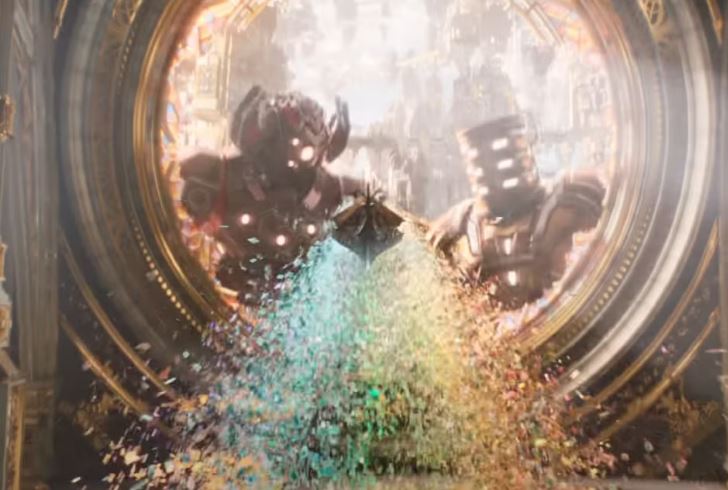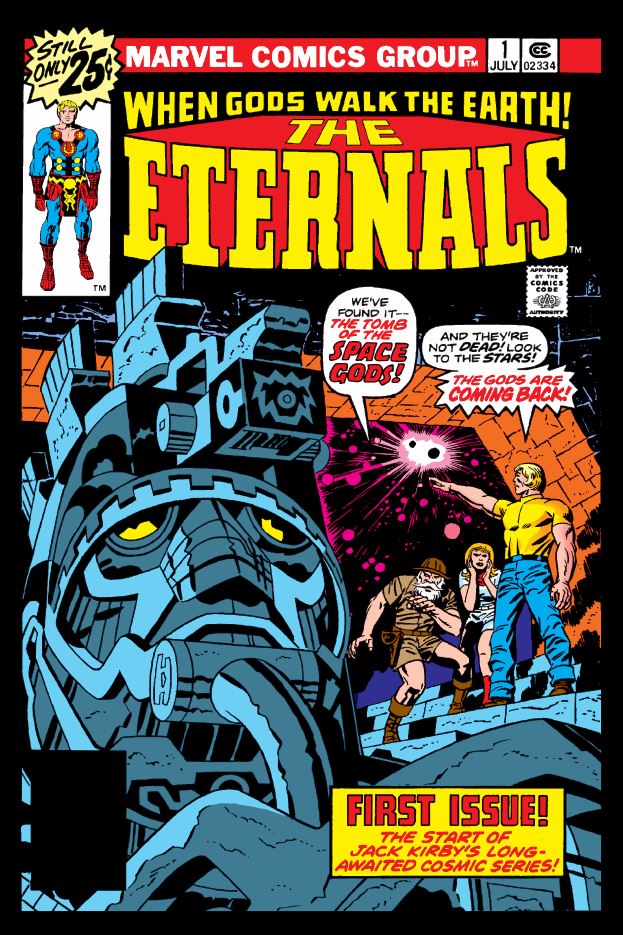
The years 2026, has marked the fiftieth anniversary of The Eternals a comic-book series written drawn, and edited by Jack Kirby in 1976. With this work, America great « King of Comics » introduced a fabulous cosmo-mythologic universe where space-gods walked on Earth and humanity shared the planet with both immortal superhumans and deformed mutants.
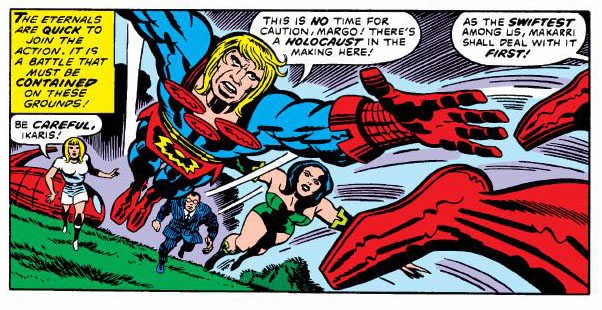
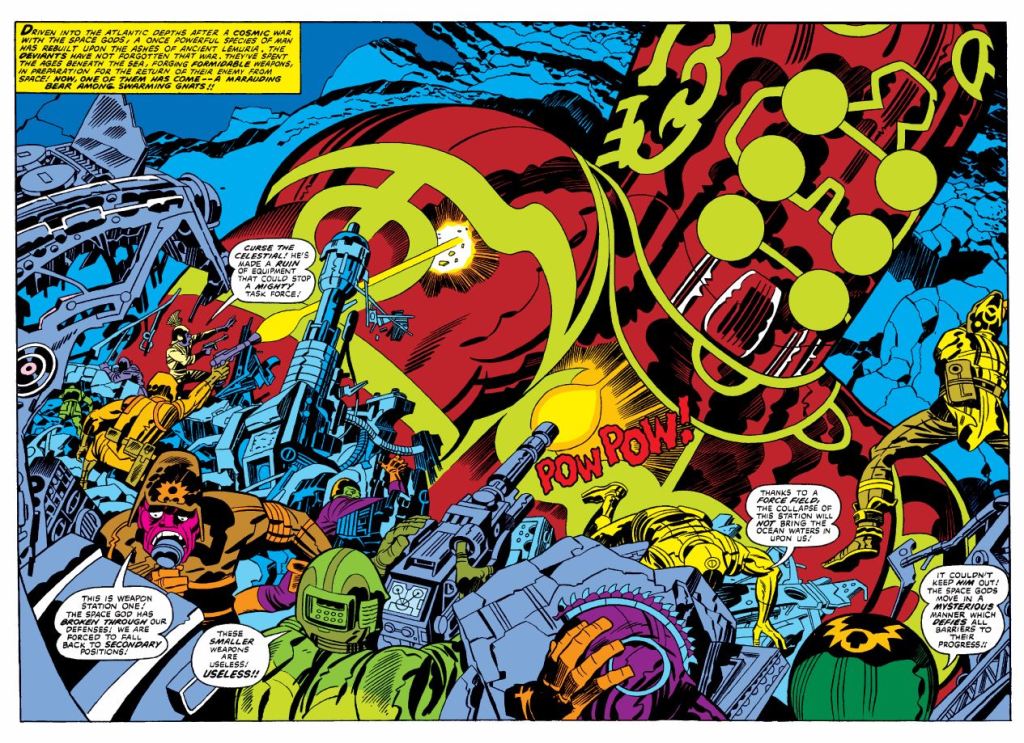
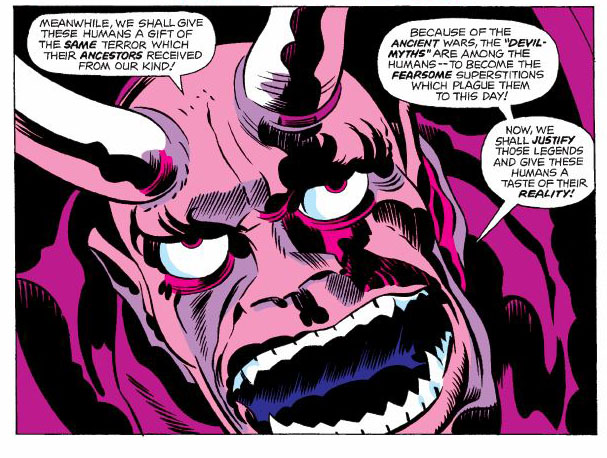
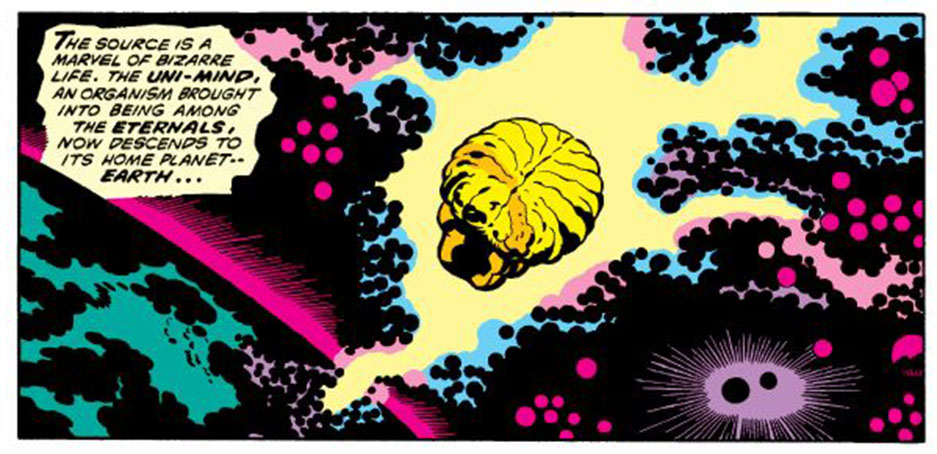
Combining myths, superheros and ufology all brought to vivid life by Kirby’s superlative pictural verve The Eternals proved itself a high mark of the comic books medium, both stunningly baroque as well as amazingly psychedelic, fusing the sublime and the grotesque seamlessly together.
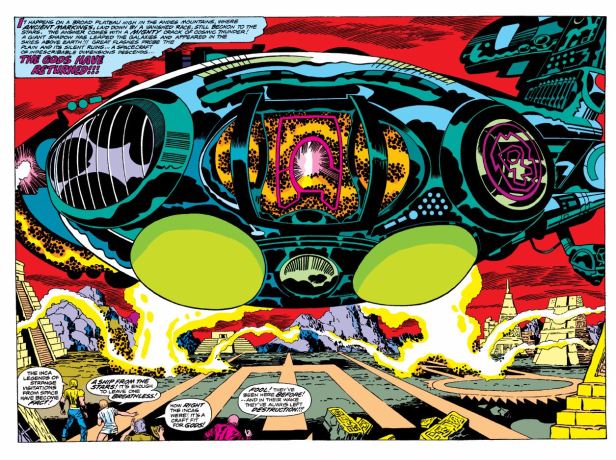
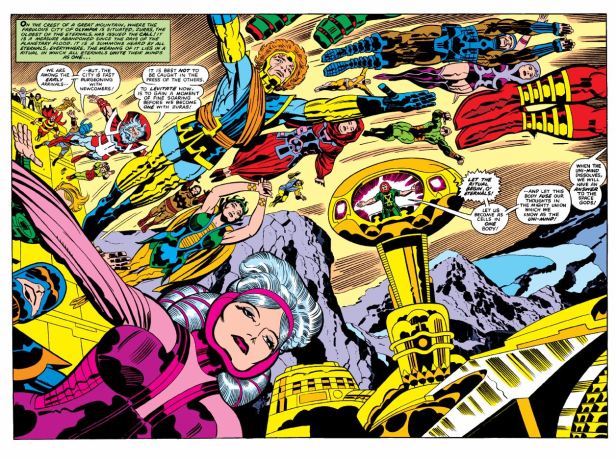
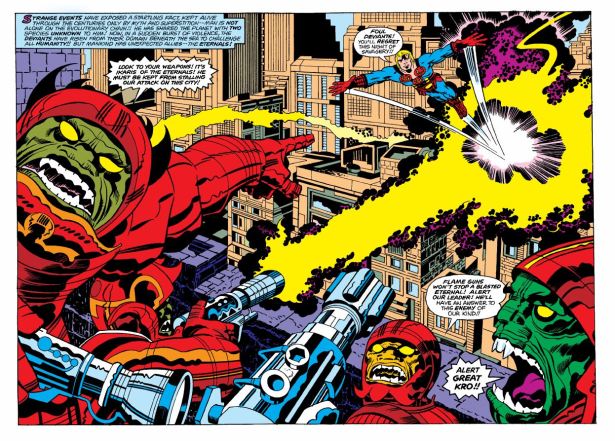
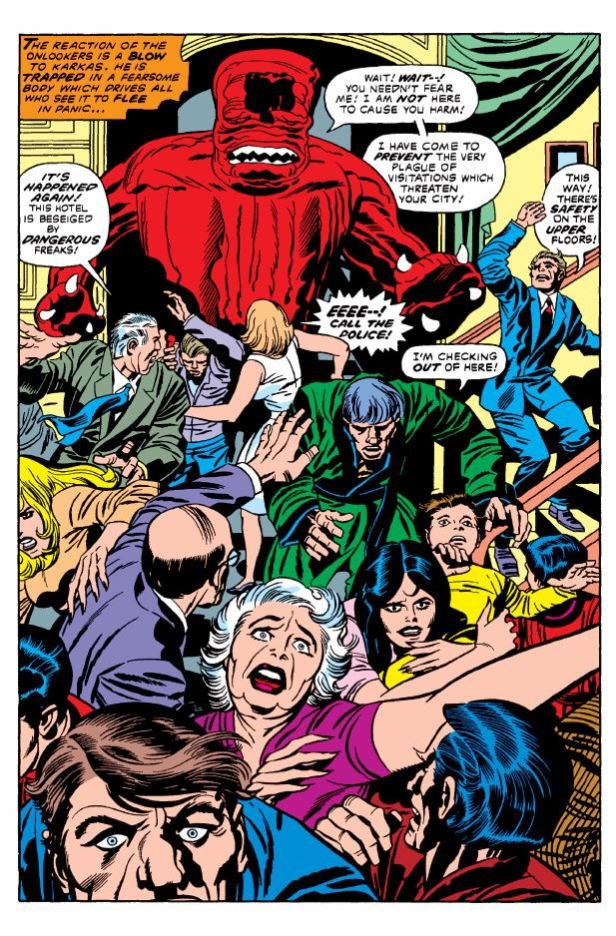
To commemorate the series’s golden jubilee the following article has being written, providing an overview, explaning its origin, describing it’s universe, and presenting its characters, all of it shown in series of galleries and slideshows,
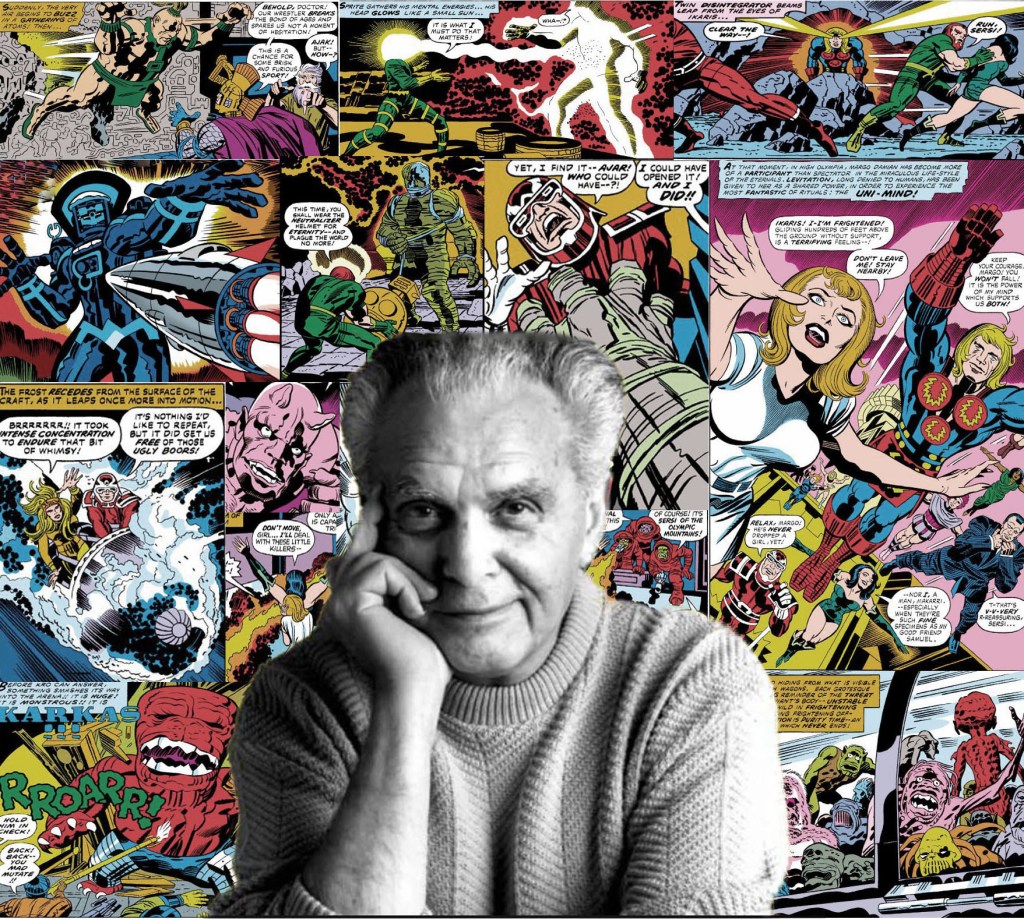
A PRELIMINARY INTRODUCTION TO JACK KIRBY AND THE ETERNALS
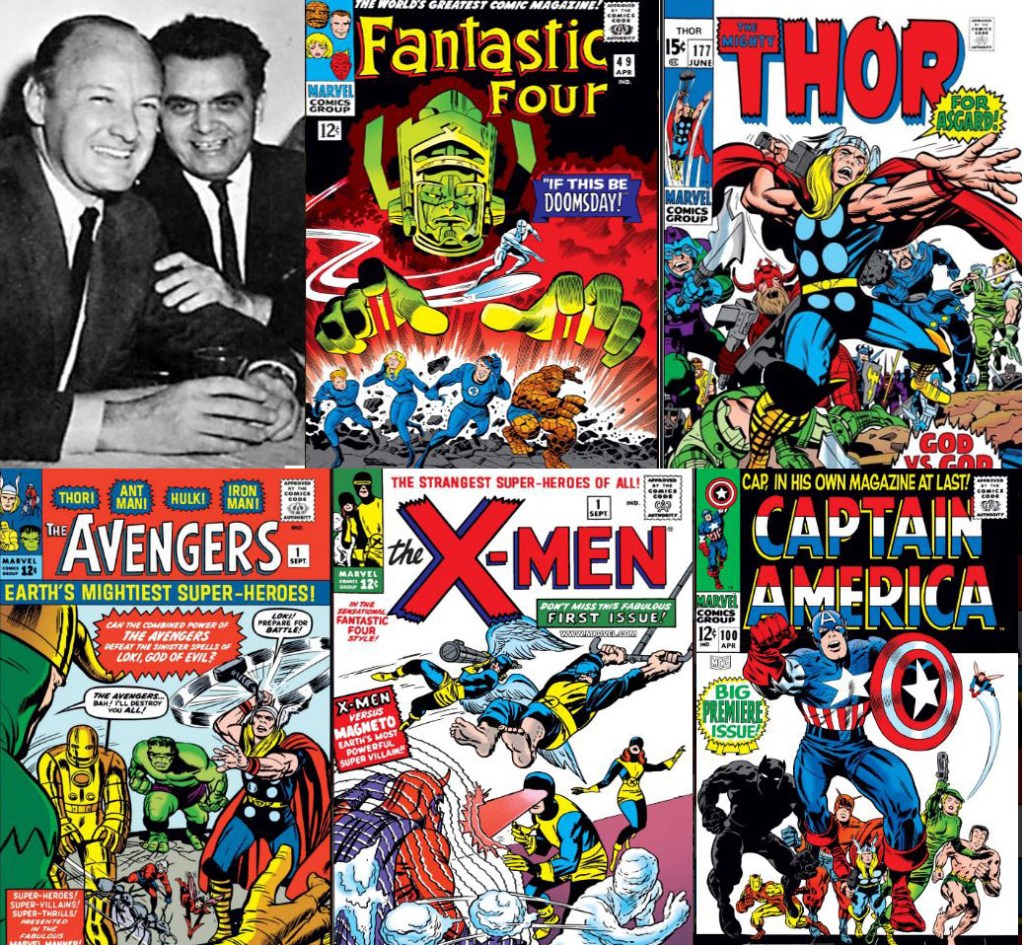
Jack Kirby was the artist who, alongside editor/writer Stan Lee, revolutionized superhero comics in the early 1960s. The Fantastic Four, Thor, Captain America, Avengers, and the X-Men are the main titles to which he contributed to, laying the foundations for the complex and interconnected Marvel Universe.
At the very dawn of the next decade, Kirby created the “Fourth World saga” for DC Comics, not only as artist but also as writer. This was a cosmic epic spanning four titles, in which several groups of heroes opposed an all-powerful tyrant (the iconic Darkseid). Considered Kirby’s masterpiece, the Fourth World was the most ambitious groundbreaking comic book series of its time and showcased its author’s visionary imagination, both visually and thematically.
Unfortunately, the saga fizzled out early on, with all its titles canceled within a year and a half. Nonetheless, The Fourth World,deeply influenced George Lucas in the development of Star Wars and has remained one of the greatest landmark comic series of all time.
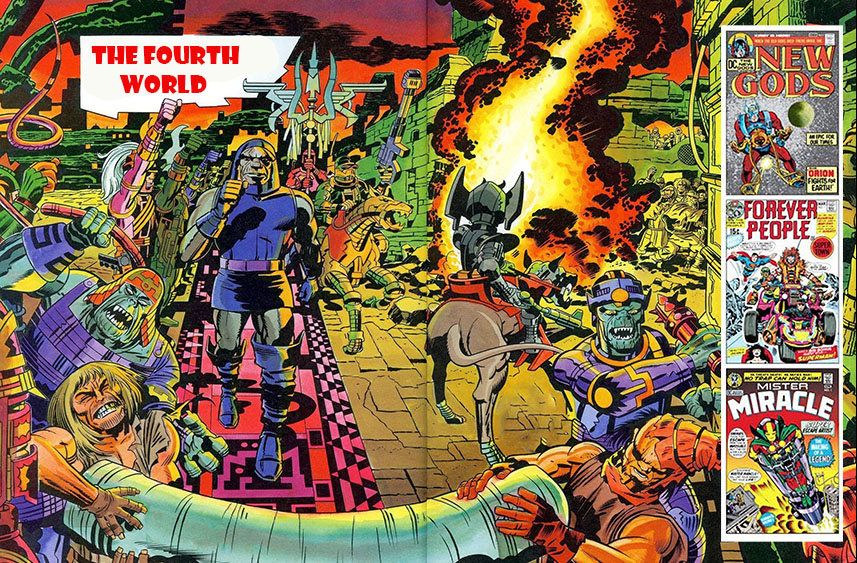
The Eternals was Kirby’s second attempt at creating a large-scale cosmo-mythological series, this time for Marvel Comics in 1976. Considered a prime example of Kirby’s spectacular artwork, often presented in full or double-page spreads, the series was nevertheless criticized for its uneven pacing, stilted dialogues, and even some occasional awkward-looking drawings,
With The Eternals, Kirby was less concerned with fully consistant storytelling than with creating a fabulous world born from his imagination, focused as much on pure visual spectacles as on uncanny revelations. This explains the series narrative shortcomings, which are largely compensated for by the artwok’s grandiose power as well the originality of the themes.
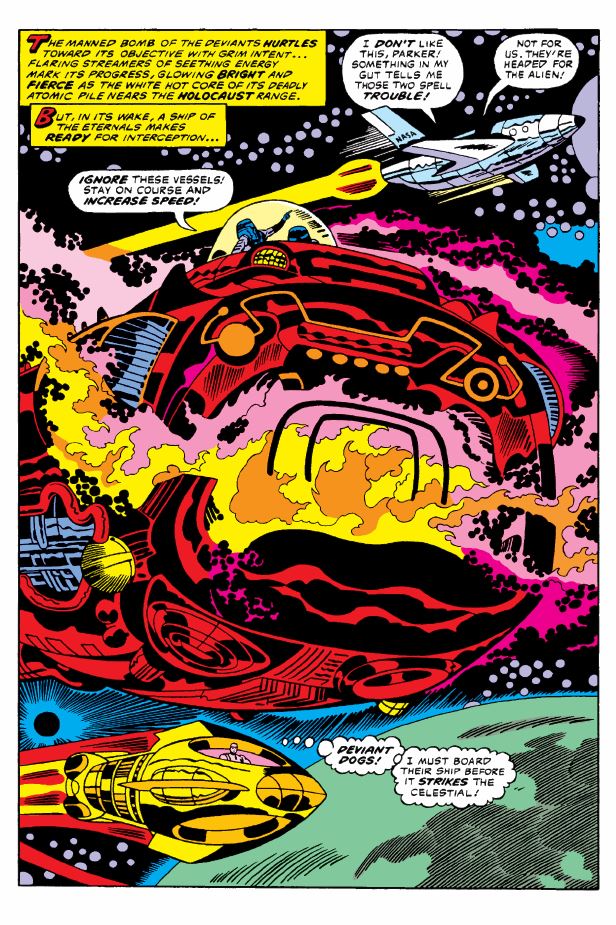
Readers unfamiliar with The Eternals and Jack Kirby are encouraged to consult the articles published about them on the Wikipedia website. The section analyzing Kirby’s works is specially noteworthy for it’s insights into his themes and artistic aims.
However, the Wikipedia entries remains somewhat lackluster because they have so few pictures to illustrate the text and treat their subjects broadly, with only a few specific sentences dedicated to the 1976 series.
The Eureka Geek article on the other hand, is richely illustrated so as show visually what it’s explains and remains keenly focused on Kirby’s series at all times.
Each ones of the pictures organized into galleries, can be enlarged by clicking to see them in their entirety.
THE ETERNALS PREMISE
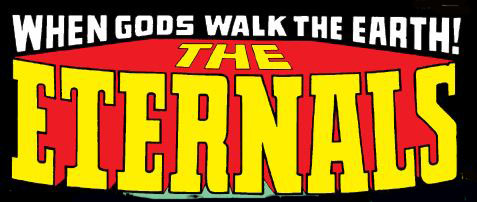
The tagline above the title on the cover gives an immediate sense of the series epic mythological scope: When the Gods Walk the Earth!
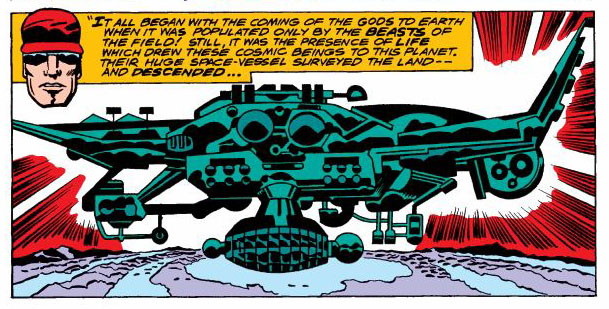
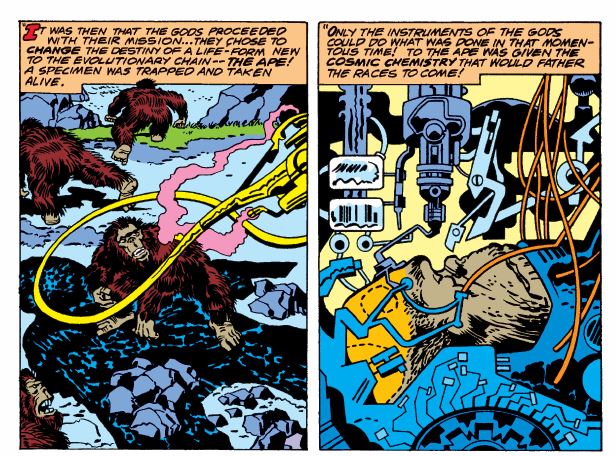
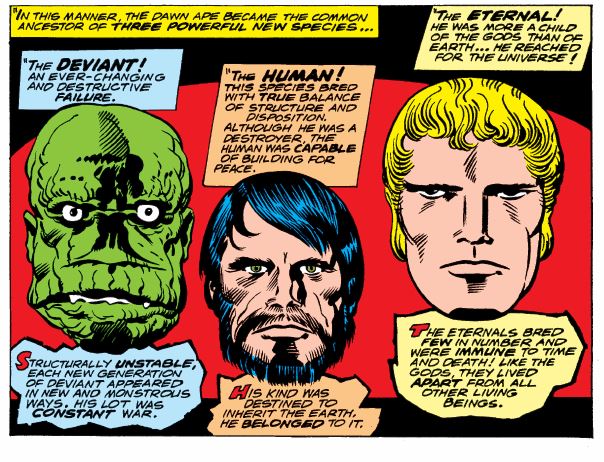
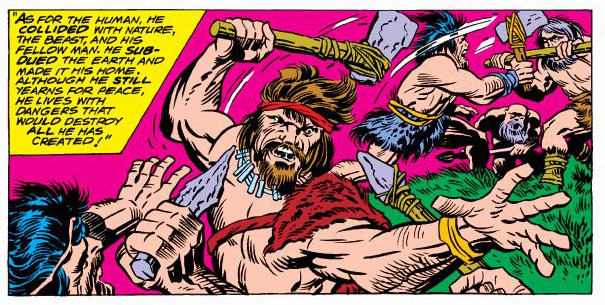
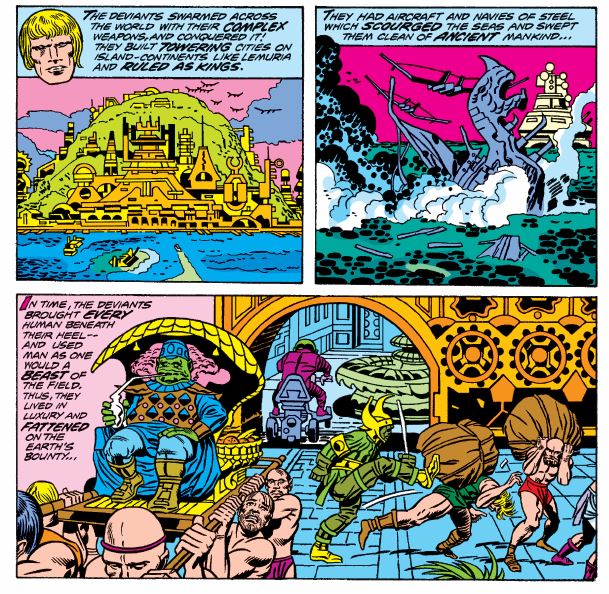
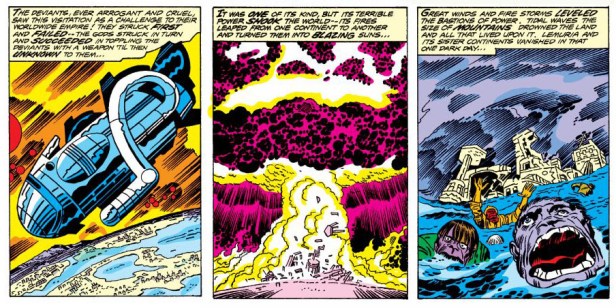
In the distant past, giant alien explorers called the Celestials came to Earth and captured primitive hominids, from whom they created three distinct races, including humans. The Celestials returned in the modern era revealed to humanity not only the existance of giant extraterrestial beings but that it shared Earth with two others races; the immortal demi-gods Eternals, and the grotesque looking warlike Deviants.
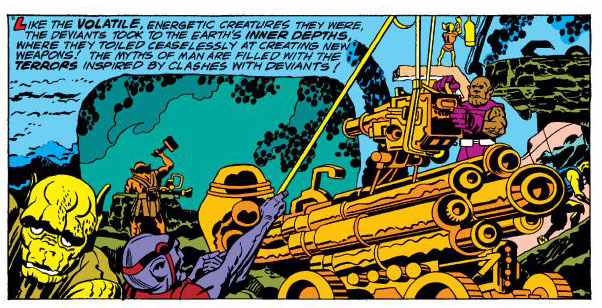
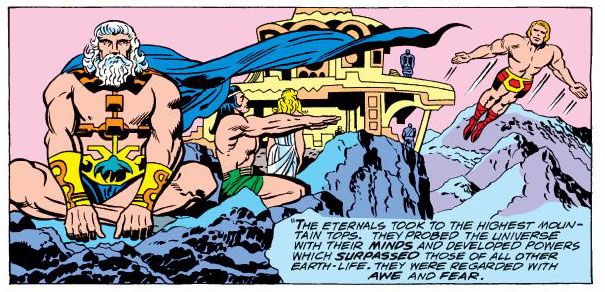
The Origin of Earth’s Three Races as Told and Drawn by Jack Kirby
PLOTS AND ADVENTURES IN THE ETERNALS
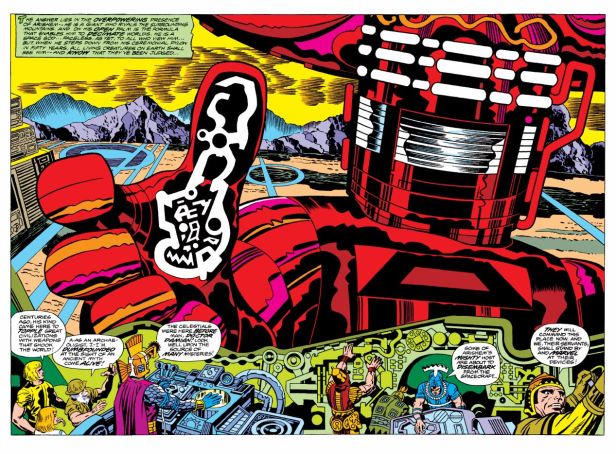
The very first issues of The Eternals presents the return of the Celestials to Earth, who have come to assess their creation worth and judge their right to exist. These cosmic visitors are depicted as enigmatic titans over 600 meters tall, almost twice the height of the Eiffel Tower.
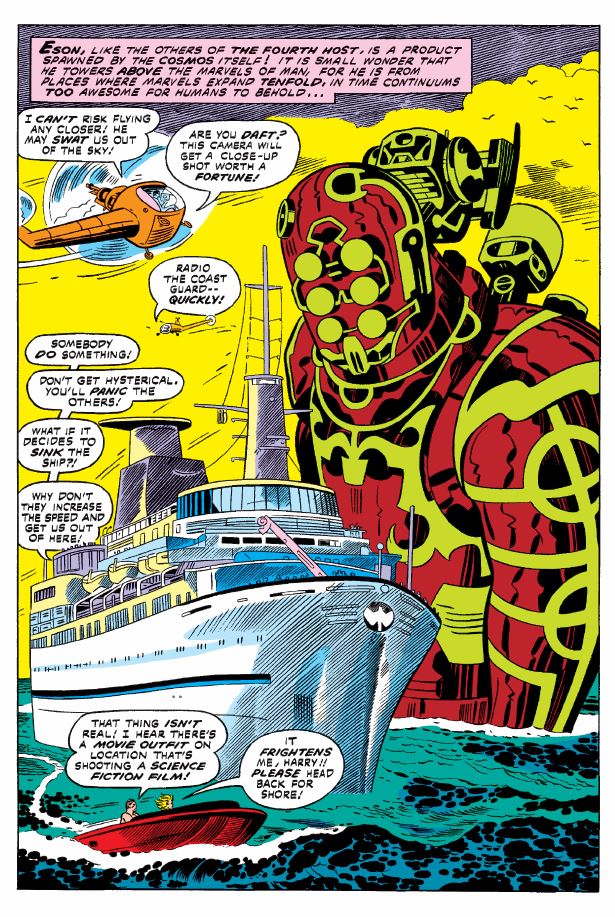
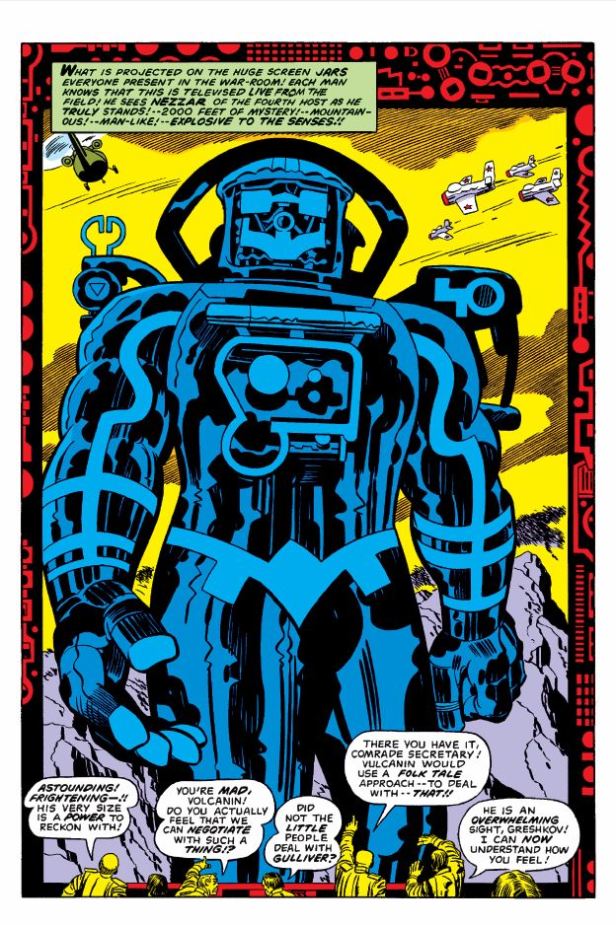
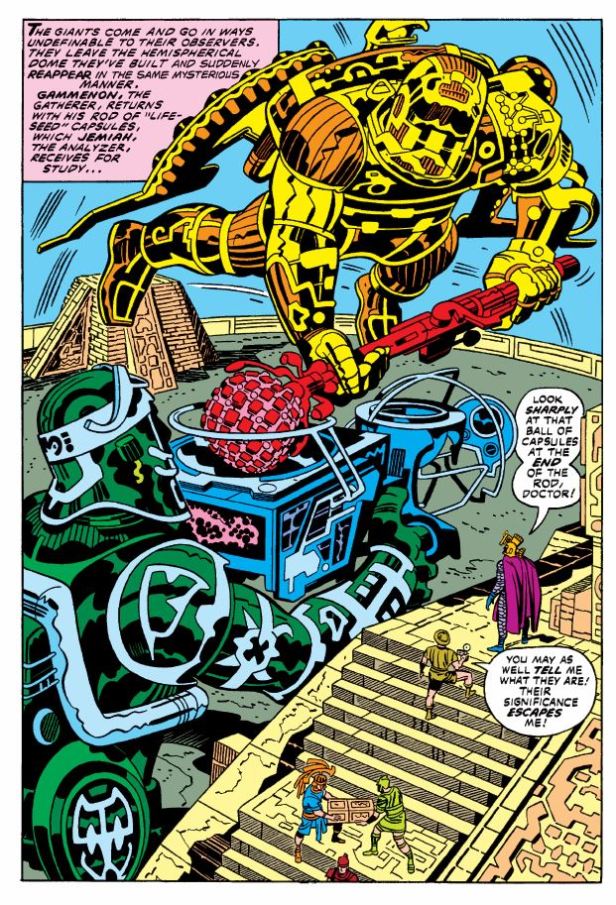
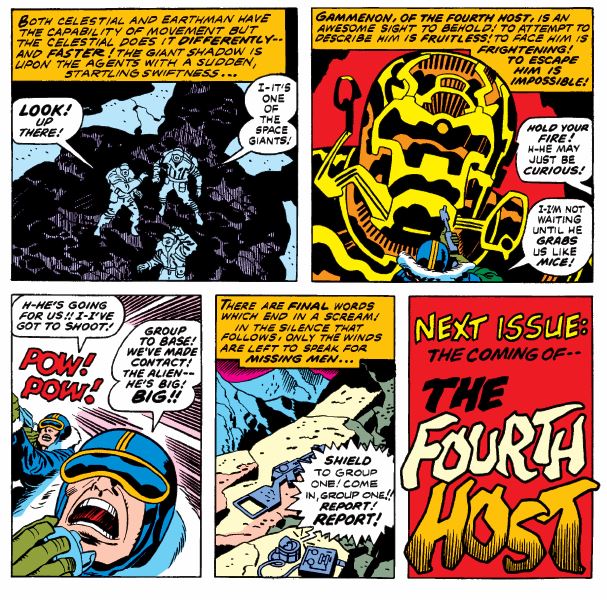
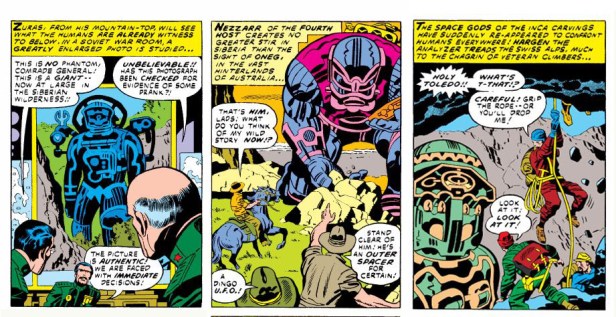
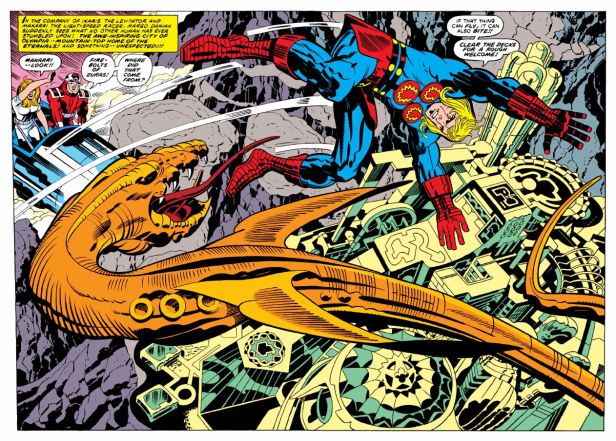
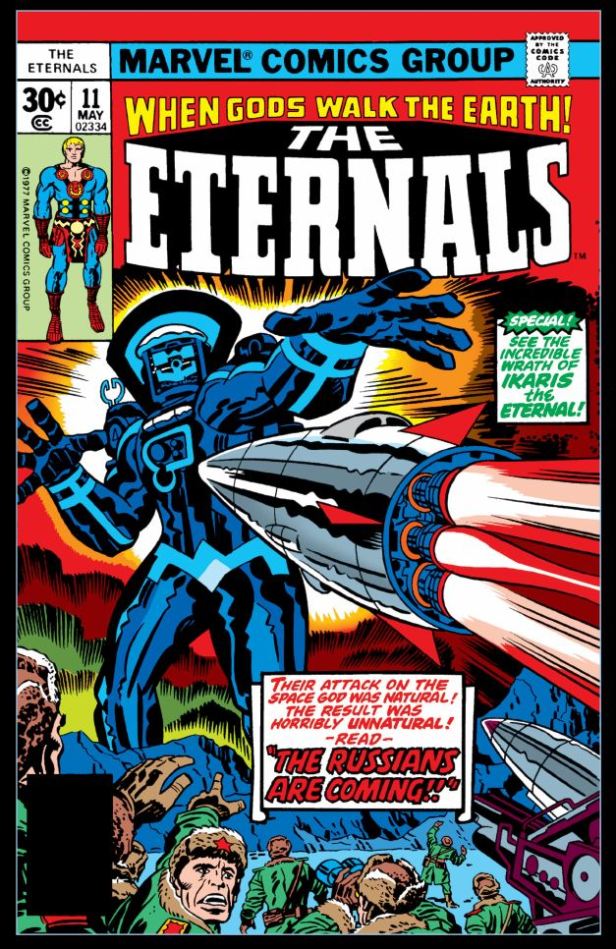
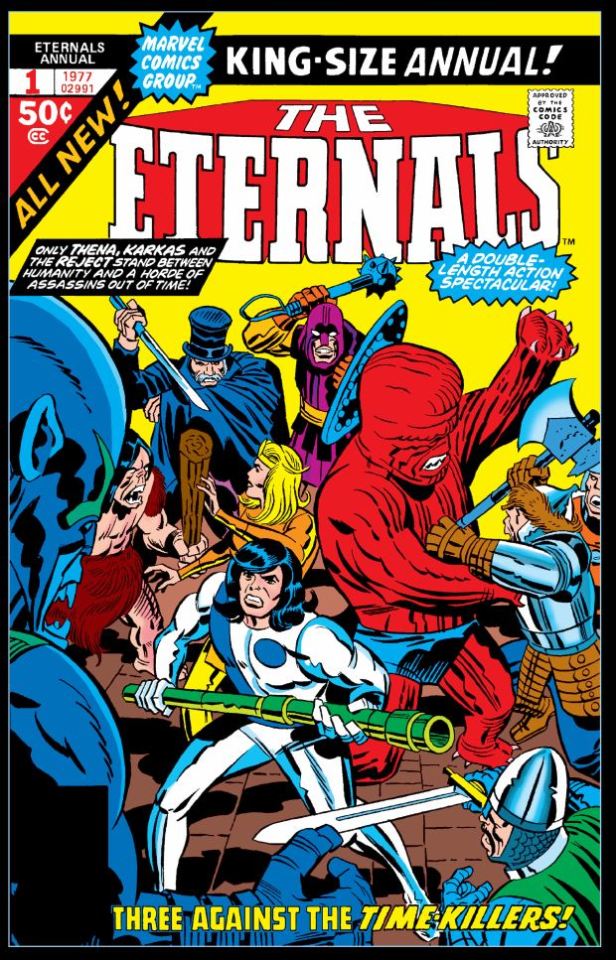
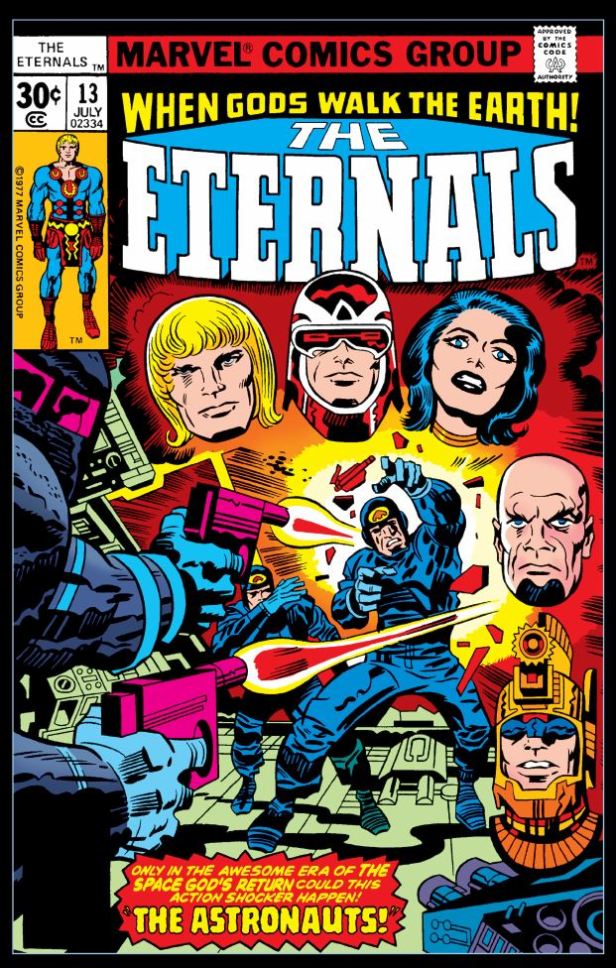
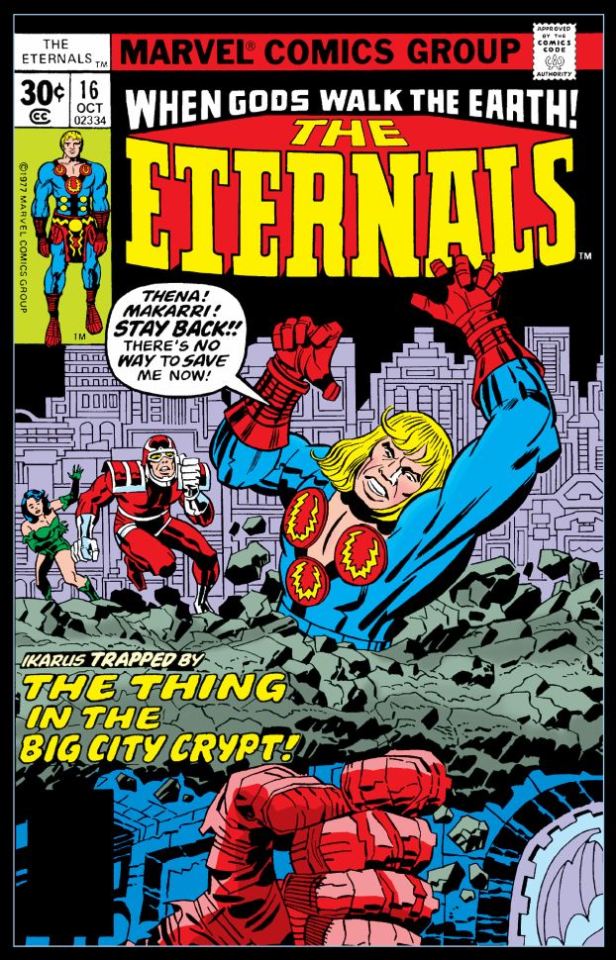
The series then follows the Deviants hostile machinations, Humanity’s own flabbergasted surprise at the Celestials existence and the Eternals’s efforts to resolve conflicts and foster communication. These plots introduce certain aspects of the Deviant and Eternal civilizations, as well as new mysteries surrounding the Celestials. The Eternals thus progresses into a collective epic, moving from one plot to another, each introducing a new set of characters and revelations.
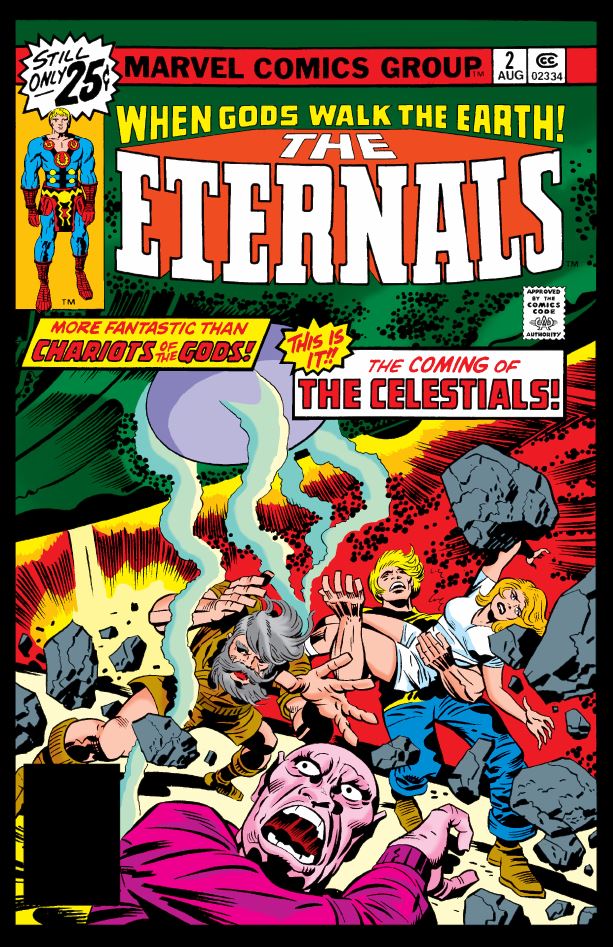
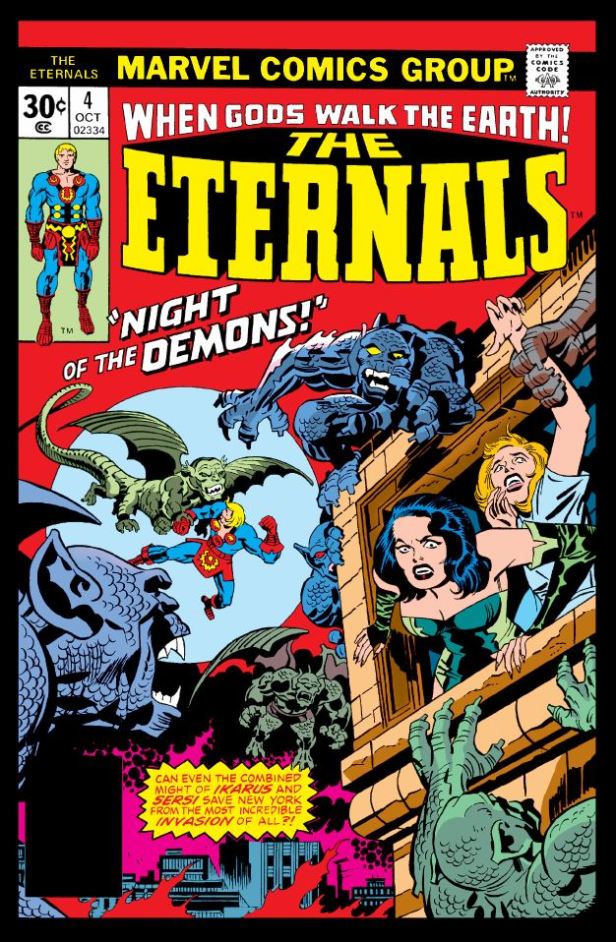
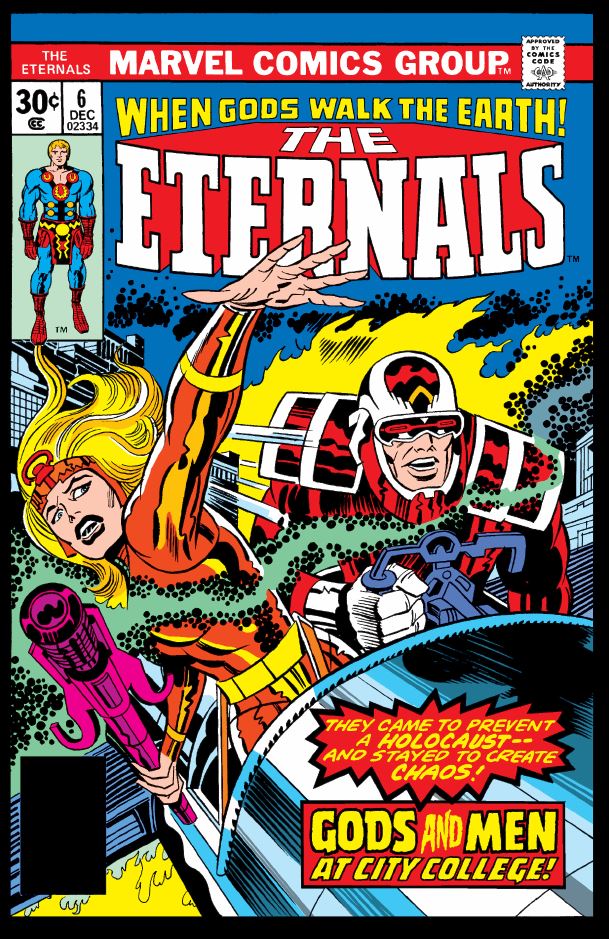
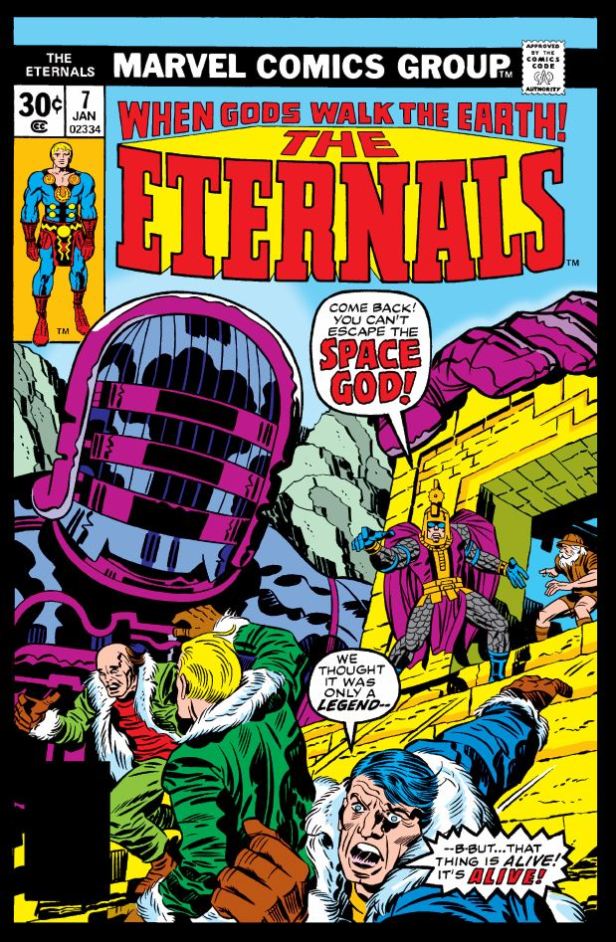
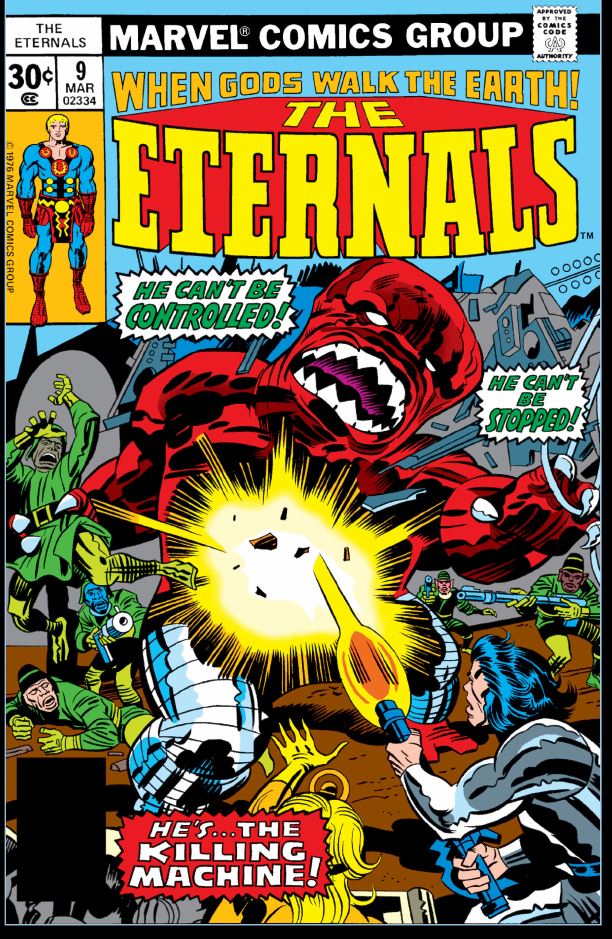
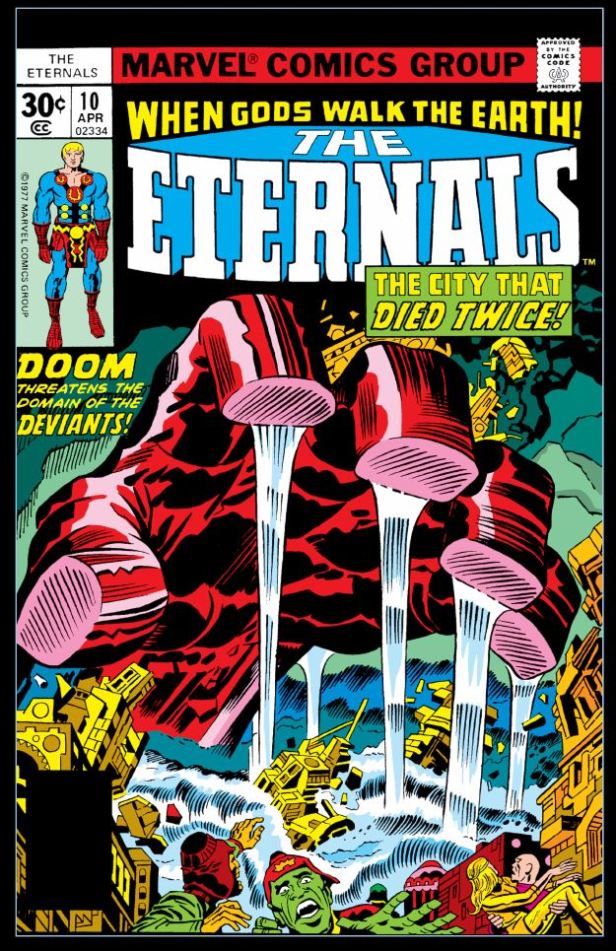
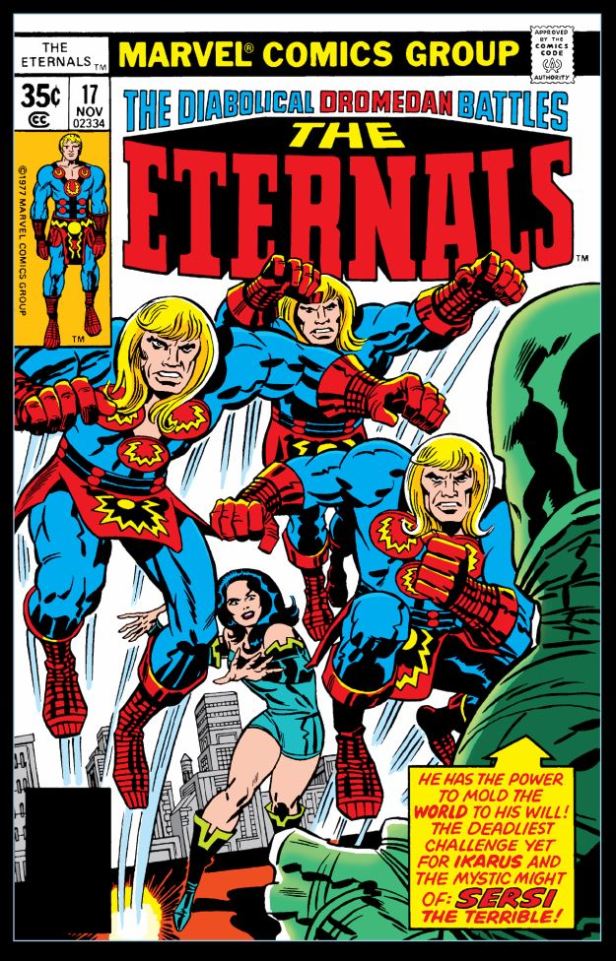
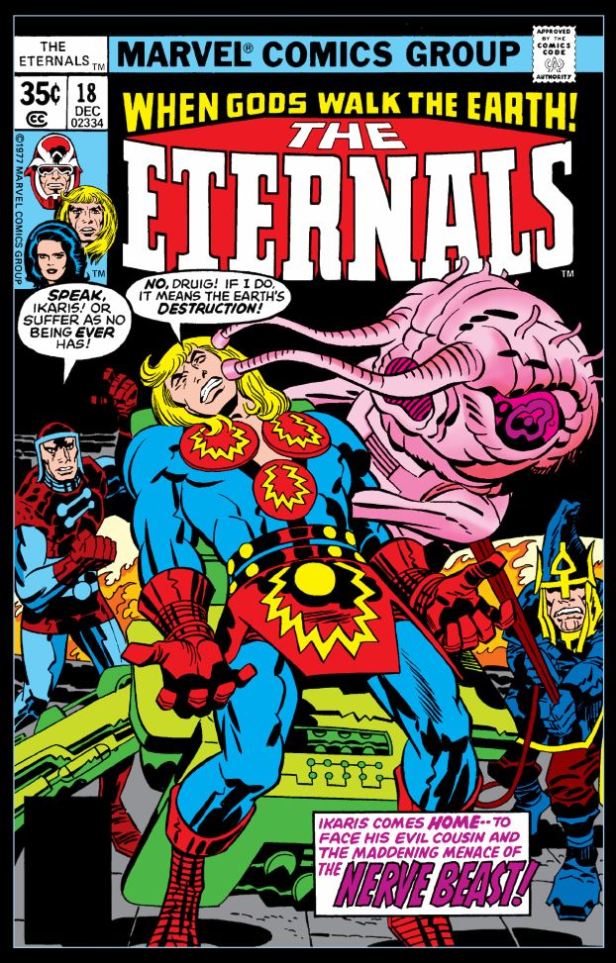
The slideshow below presents a selection of cover pages, giving an idea of the many adventures in the series.
THE ETERNALS: A WORLD WITHOUT THE WONDERS OF MARVEL COMICS
When Jack Kirby began The Eternals, he had the firm idea that his new creation would take place outside the Marvel Comics Universe. He wanted to work on a completely blank canvas to create his own world where the presence of flying superhumans, cosmic gods, and grotesque mutants would be entirely new to ordinary humans. He sought to evoke a sense of wonder that was no longer possible in the main Marvel Universe with figures like Thor, the Fantastic Four, and Spider Man were part of the everyday scenary and where an alien invasion occurs nearly every semester of so.
The Eternals series thus went against the well-established rule that all Marvel Comics featuring superhuman beings were part of a single interconnected universe. This is how Spider-Man was able to cross paths with Dracula at one point, or even a time traveling Red Sonja and how Shang-Chi, the master of kung fu, had a run-in with the monstrous Man-Thing.
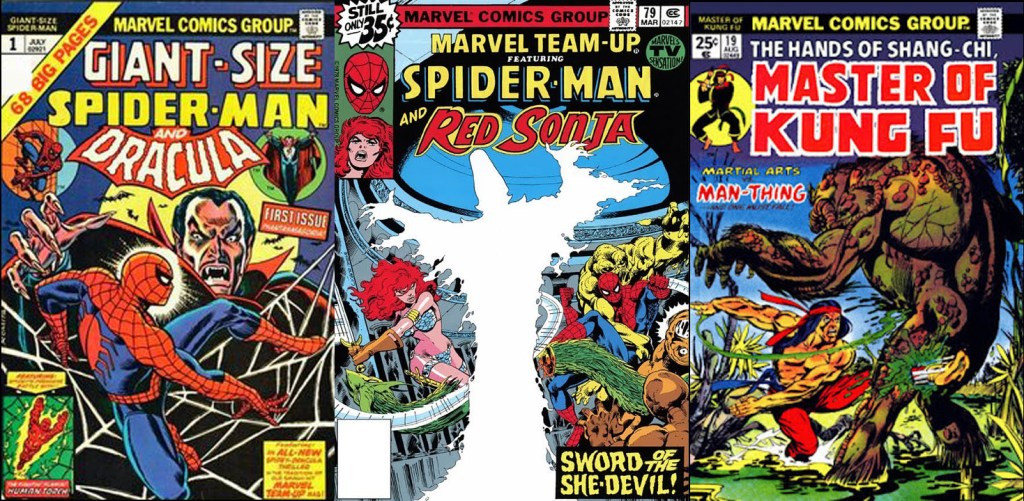
The absence of connections to the establish Marvel Universe displease some readers but Kirby was at first very keen on it and this made The Eternals his most unique creation within Marvel Comics.
Eventually though, Kirby understood, or was told, that The Eternals would sold better if a connection was established. Nevertheless, the concessions he made in the final pages of issue #6 of the series consisted of a few ambiguous references that didn’t truly compromise the idea that The Eternals was part of its own universe. One is a reference to S.H.I.E.L.D, the Marvel Universe’s spy outfit; the other an odd showing of the head of the Thing, a member of the Fantastic Four. Later in the series one of the Marvel Universe most iconic figures appeared to face-off the Eternals, but here again Kirby resorted to a outlandish ambiguous trick.
THE COSMIC MYTHOLOGY OF THE ETERNALS.
The Eternals.
Fascinated by mythologies and the concept of godhood Jack Kirby has depicted numerous gods walking among men, beginning with the superhero Thor. In The Eternals, the protagonists are not technically gods in the divine sense, but immortal humans endowed with both physical and mental powers. Although they have mostly lived apart from the rest of humanity or hidden within it, their occasional interactions have given rise to legends of gods and heroes through the myths of many civilisation. Most of the Eternals in the series are actually modeled on figures from Greek mythology: Zeus, Athena, Circe, etc.
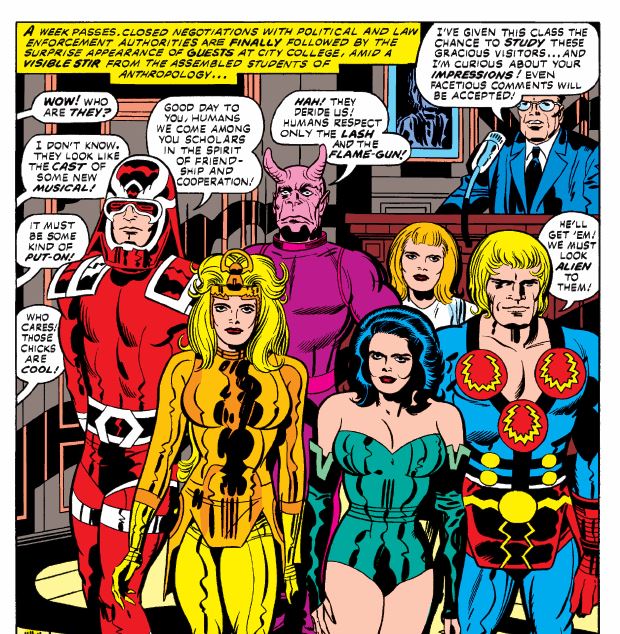
Eternals and Deviants have been hereditary enemies since the dawn of time. They are antitheses of each other but share some common traits. In particular, they are races living hidden from humans and are using advanced technology. When not in conflict with the Deviants, the Eternals spend their time meditating, developing advanced abilities, and pursuing personal hobbies.
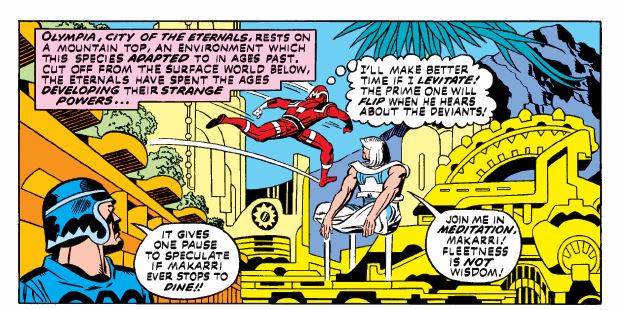
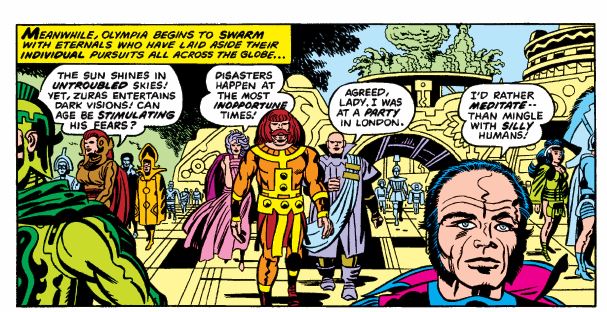
The return of the Celestials and the discovery by the humans of the hidden races has put an end to a long-standing status quo, and Earth and its inhabitants have found themselves in an increasingly tensed situation as depicted in the series.
The Celestials.
While the Eternals are inspired by Greek gods or heroes, the imposing and enigmatic Celestials have names that sound like those of Hebrew or Mesopotamien people in the Old Testament. : Arshim, Jemiah, Nezzar, etc. The impression of omnipotence and mystery surrounding their presence evokes the all-powerful aura of Yahweh himself the one true god.
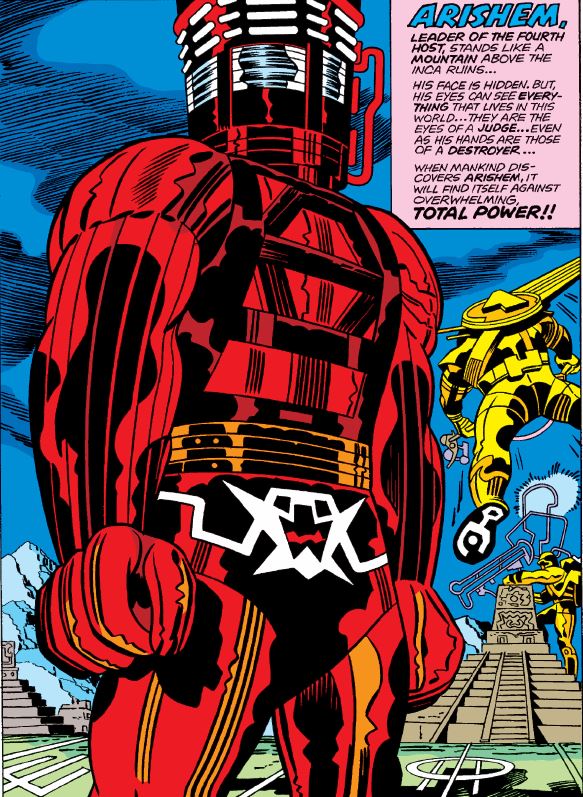
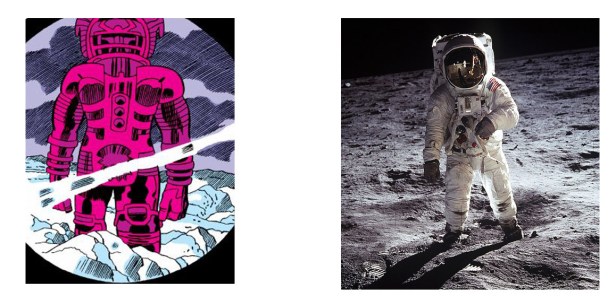
Although commonly known as « space gods » by both the Eternals and the Deviants, the Celestials are not divine in nature. In fact, they possess several attributes that are more reminiscent of astronauts on a scientific mission. The way they operate are similar, for example, to NASA’s Apollo missions, with an orbital vehicle deploying a team of explorers on the ground at a designated research site. The Celestials very appearance—that of humanoid clad in metal armor, often equipped with portable devices—is somewhat reminiscent of lunar spacesuits.
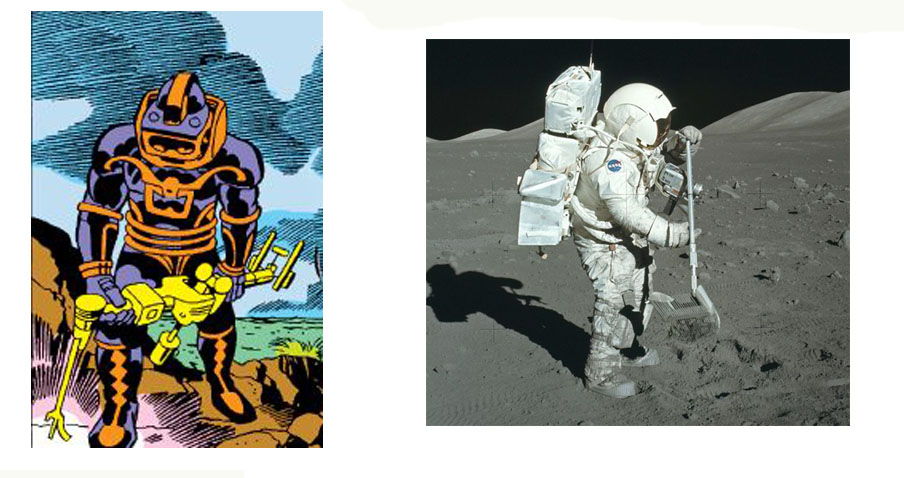
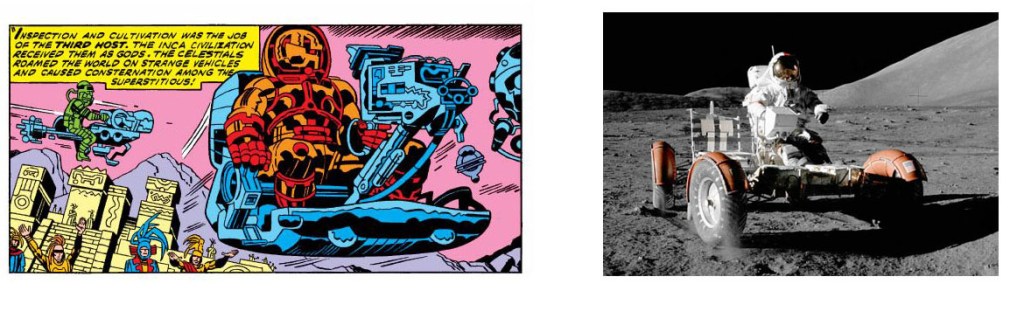
The Deviants
The Deviants are the series main villains. They are the absolute opposite of the Eternals: ugly, cruel, petty, violent, and treacherous. They harbor an absolute hatred for both the Celestials and the Eternals and despise humans. While the Eternals are largely inspired by Greco-Roman mythology, the Deviants evoke the figures of trolls and dwarves from Norse legends. In the series, the Deviants have used their fearsone appearance and ferocity to spread belief in the Devil and others sorts of demons.
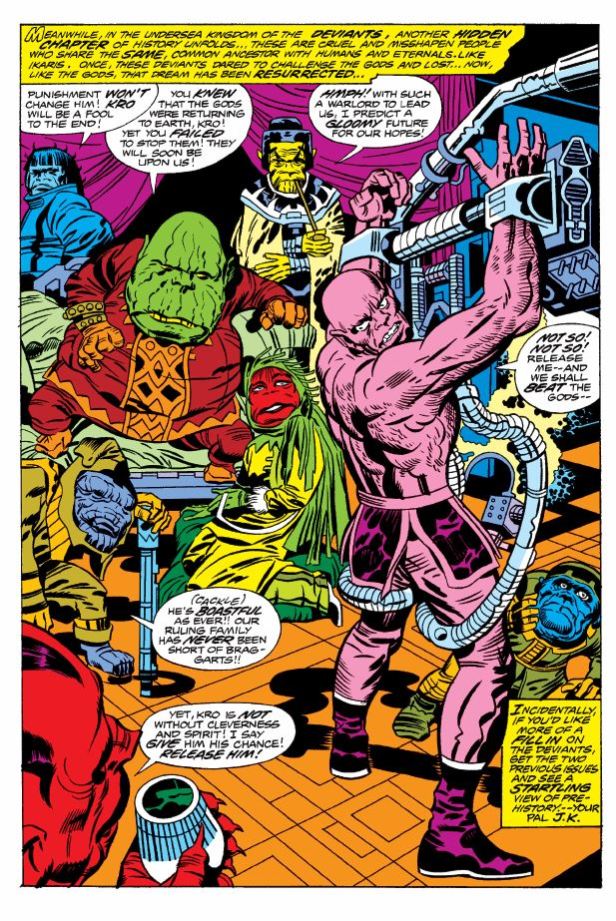
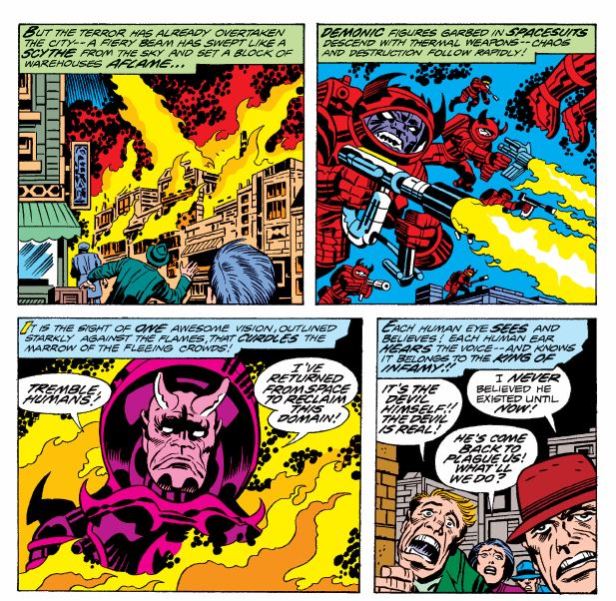
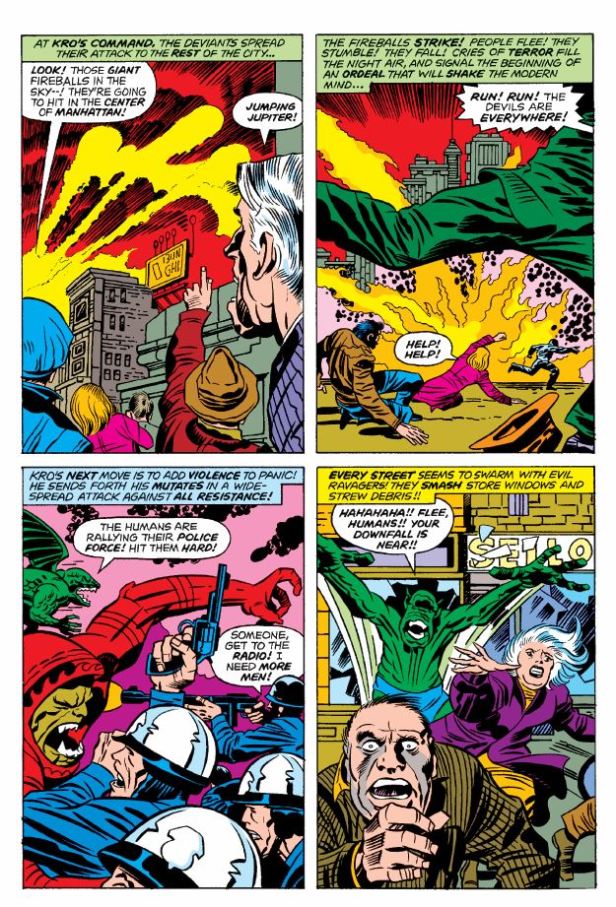
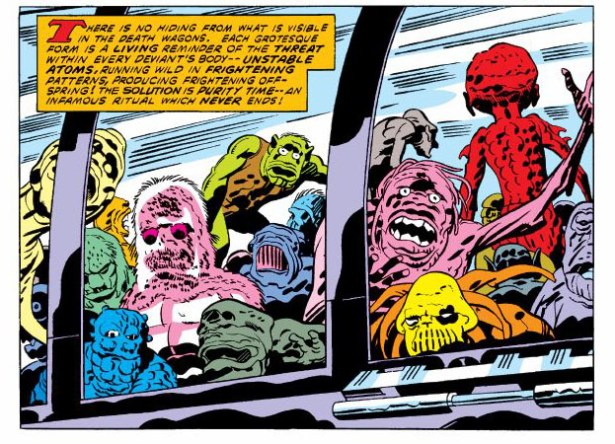
Beyond it’s simplistic manichaeism, Kirby has nonetheless given these antagonists something of a tragic aura. After all, the Deviants are a race who must live with a terrible heredity, their genes being extremely unstable and volatile, hence their grotesque appearances. Their outrages and hatreds are those of the damned, victims of a crual, unjust fate, as it is often found in Shakespeare’s works with iconic characters such as Shylock, Caliban, and Richard III.
INFLUENCES AND BORROWINGS.
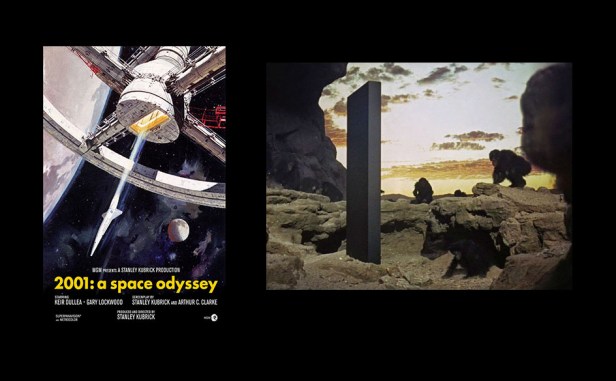
The premise that extraterrestrial visitors visited Earth in ancient times and influenced humanity appears in some of the earliest science fiction novels of the late 19th century. However, it was the iconic film 2001: A Space Odyssey, released in 1968, that truly thrusted the ideas into popular culture with its mysterious black monolith capable of changing the evolution of primitive homnids. The late 1960s saw the idea of ancient visitors spread both on television and in comic books, even including one adventure in the famed belgian BDs Tintin series: Flight 714 to Sydney.
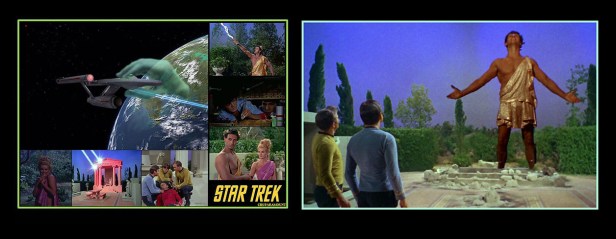
An episode of the Star Trek series, « Who Mourns for Adonais, » features a cosmic being viewed as the god Appolo in ancient antiquity. 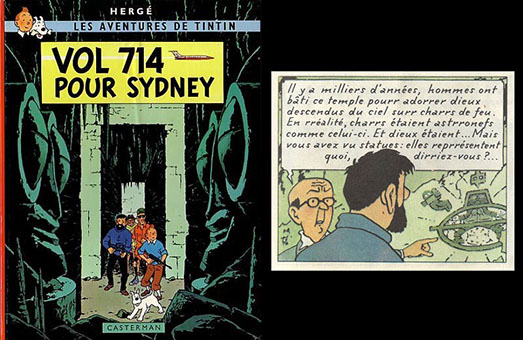
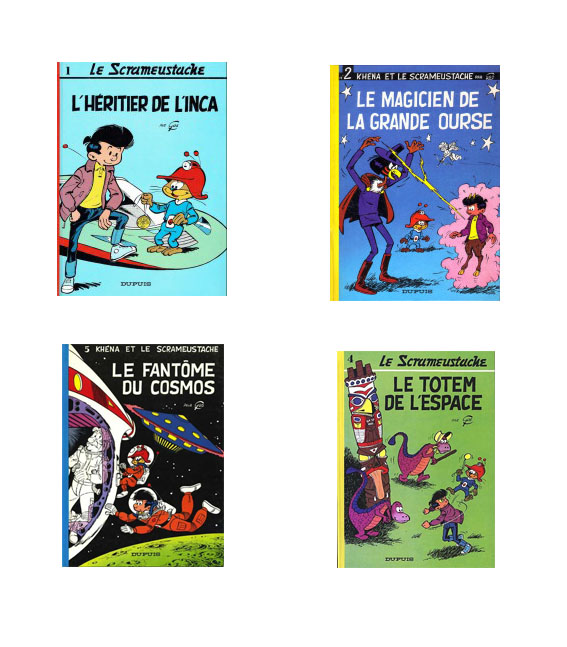
The early adventures of the Franco-Belgian series Khéna and Scrameustache, published throughout the 1970s, presented stories mentioning ancient astronauts. 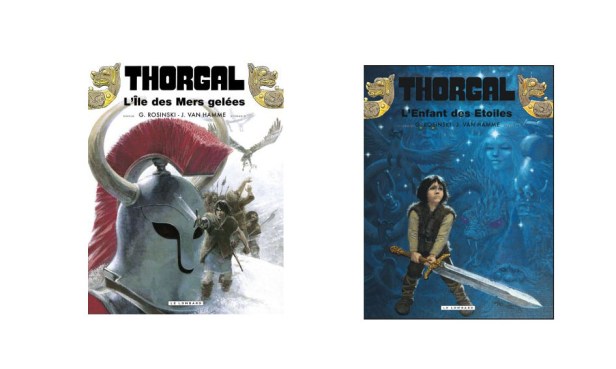
Mixing myth and cosmic elements like The Eternals, but in a different way, the Thorgal series also makes use of the concept of ancient astronauts, revealed in the second album and developed further in the seventh, which is an anthology of short stories. 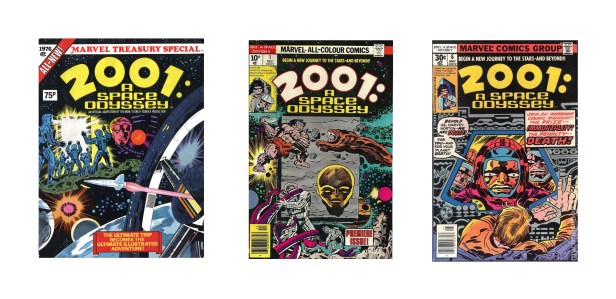
Jack Kirby himself wrote and drew an adaptation of 2001: A Space Odyssey and continued the story in a series published alongside The Eternals between 1976 and 1977.
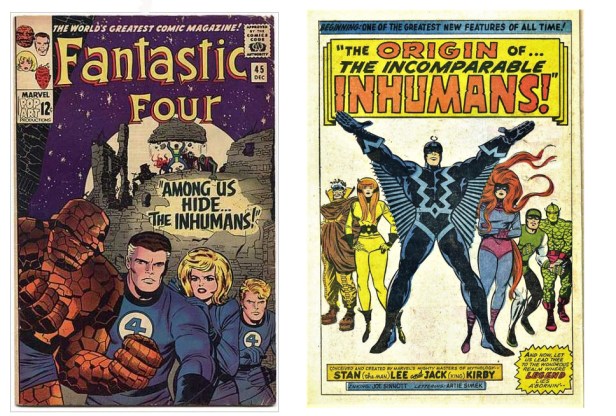
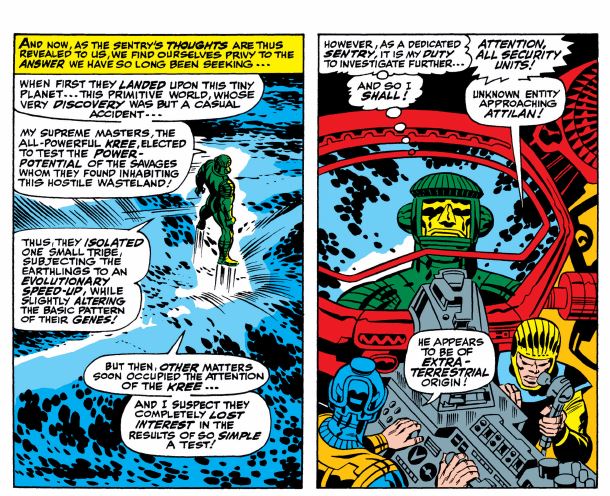
Kirby had already used the idea of a hidden race created by extraterrestial visitors as early as 1967 to establish the origin of the Inhumans, a group of superhumans peopes making recurring appearances in Fantastic Four. They can be considered the precursors of the Eternals, with whom they share many similarities.
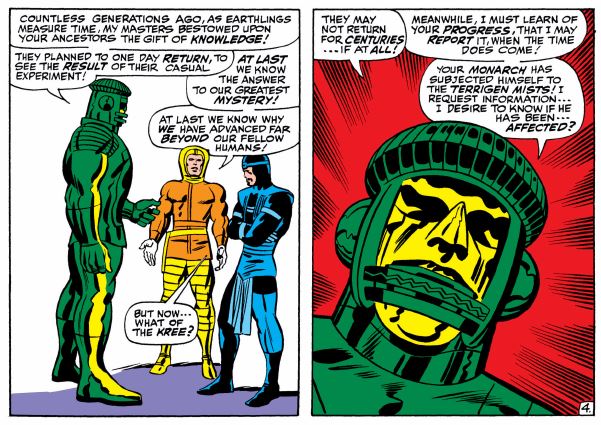
It would seem that the spark that led Kirby to create the Eternals was not found in a work of fiction but in a pseudo-scientific book: Chariots of the Gods?(1968), by the Swiss writer Erich von Däniken (1968). The book developed the theory of ancient astronauts, using numerous specific sites and artifacts to support its thesis, such as the Pyramids of both Egypt and Mesolithic America, the Nazca Lines, the Stonehenge megalithic monument , as well as many cave paintings and engravings with mysterious and ambiguous meanings (see slide below). Kirby drew inspiration from the examples cited not only to develop his plot, but also to design certain locations as well as the Celestials themselves (see second slide).
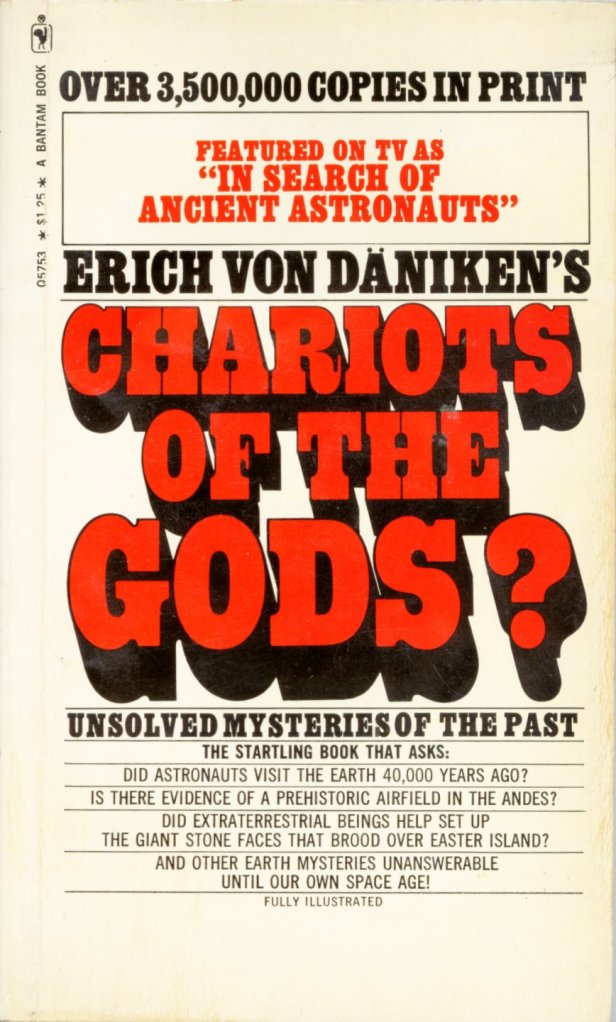
The original German title of the book is Erinnerungen an die Zukunft, Ungelöste Rätsel der Vergangenheit, which translates as: “Memories of the Future, Unsolved Mysteries of the Past.” The book english editor likely thought Chariots of the Gods? catchier. 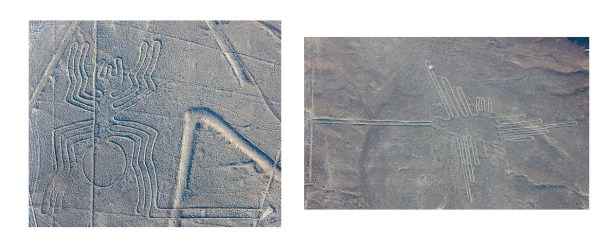
Two of the Naska giant geoglyphs. 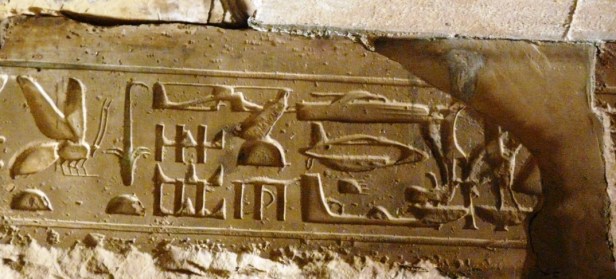
Egyptien hieroglyph, some of which bear a striking resemblance to vehicles. 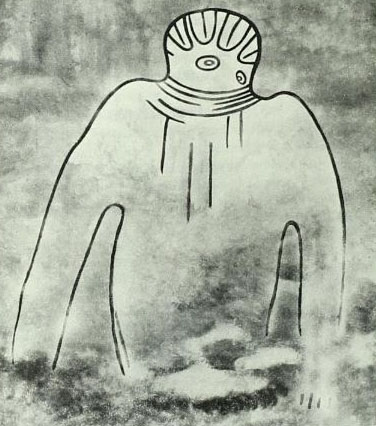
Evocative rock engraving from Tasili en Algéria 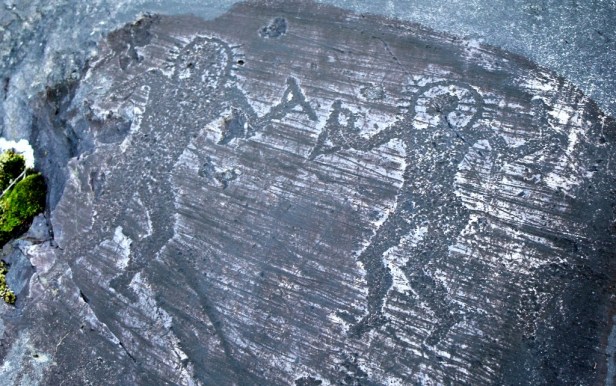
Petroglyphs from Val Camonica, Italy 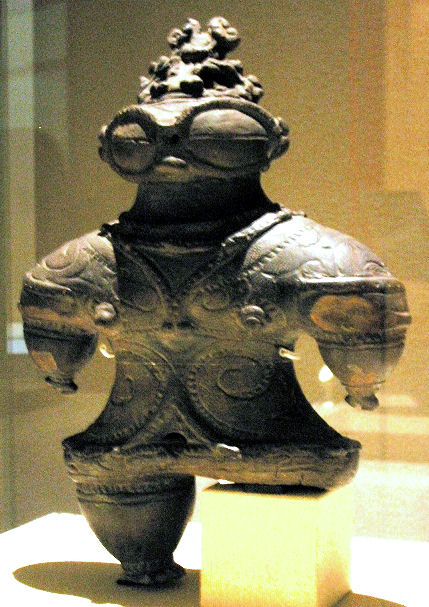
A statue from the Jomon culture of Japan interpreted as possibly representing a spacesuit. 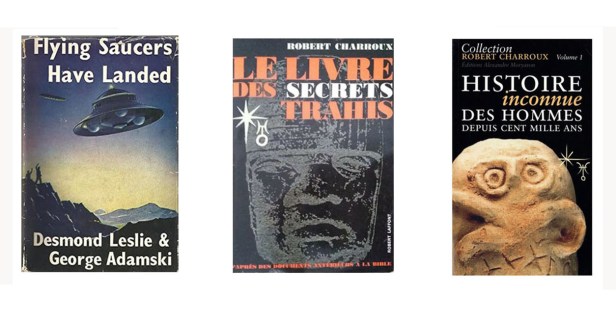
The Wikipedia entry on Chariots of the Gods reports that Erich von Däniken plagiarized ideas from earlier works, notably those of the ufologist Robert Chardoux 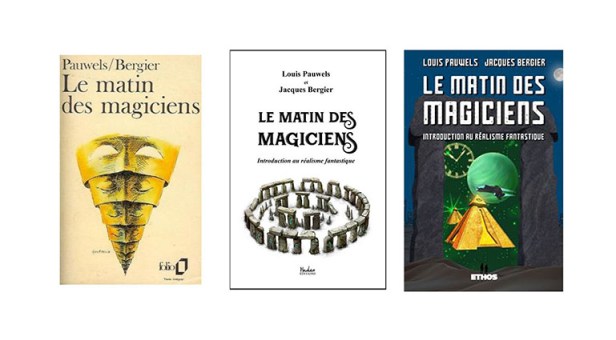
The Morning of the Worlds, a French book dating from 1956, is one of the first pseudo-scientific works to address the ancient astronaut theory a full decade before Von Däniken’s book, popularized the idea worldwide.
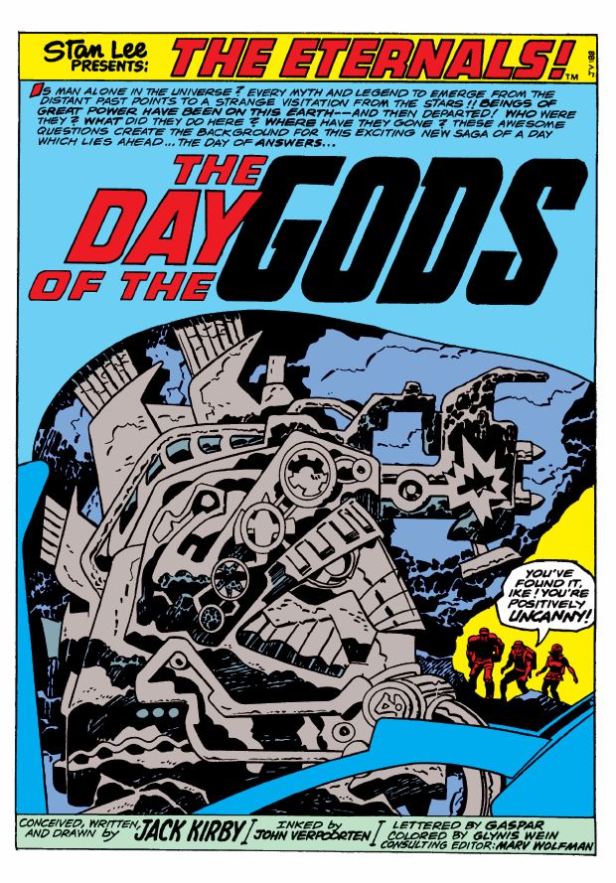
First page of The Eternals, with a title that almost exactly replicates the English title of Eric Von Däniken’s book. 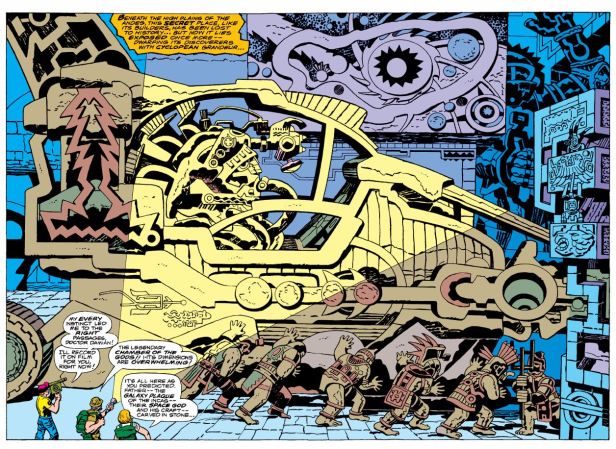
Kirby’s drawing quite litterally a chariot of the gods in Eternals # 1 first double spread page. 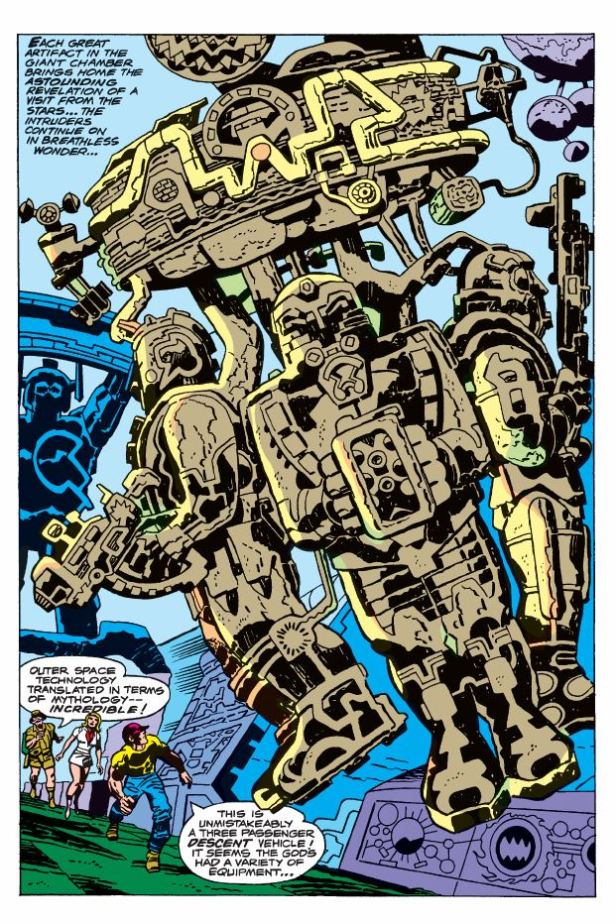
Ancient astronauts landing on Earth 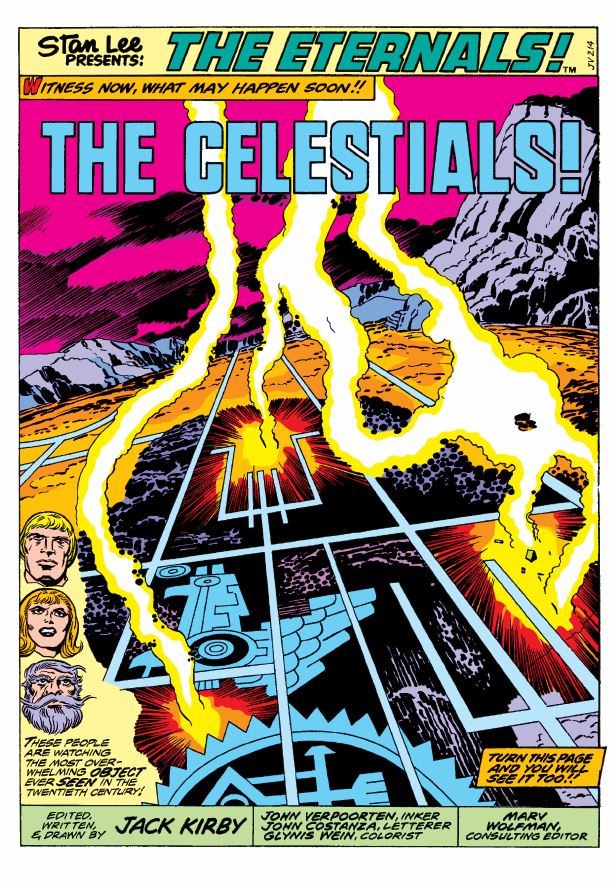
First page of the second issue with a setting inspired by the Nazca Lines.
The Eternals also made references to other kinds of mysteries fancied through the sixties and seventies such as UFOs, the Bermuda Triangle, and the sunken continent of Atlantis.
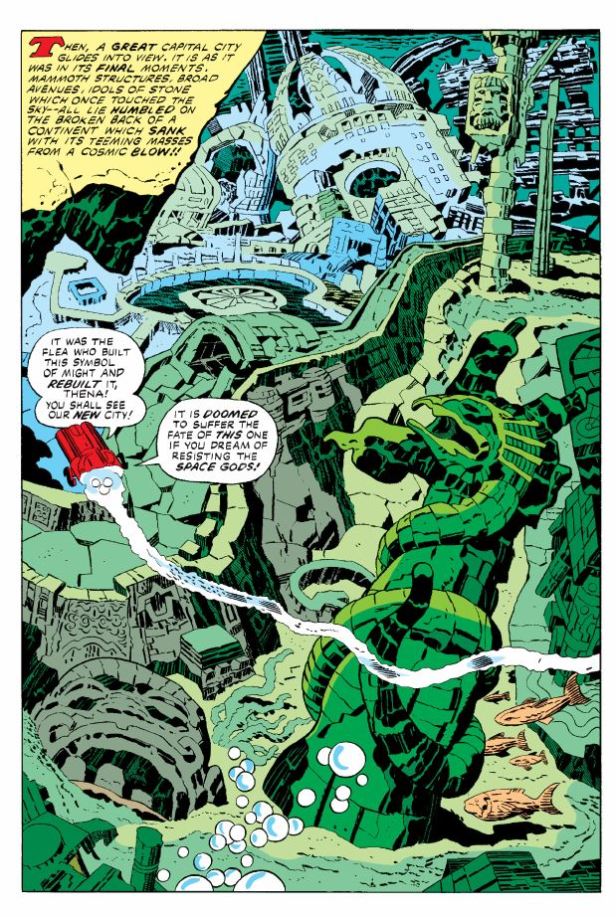
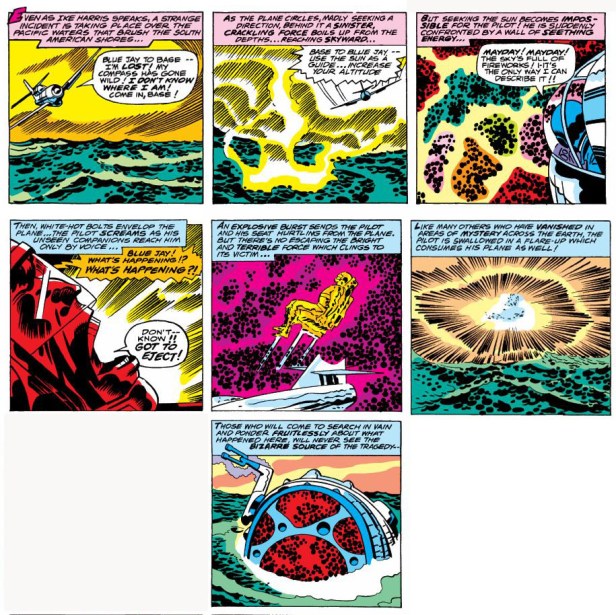
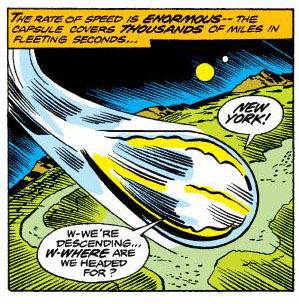
That said, while the idea that extraterrestrial visitors might influenced mankind evolution wasn’t new when Kirby began The Eternals, he took the concept much further than anyone before him by making extraterrestrials the very creators of humanity. Even more remarkably, they had come to scientifically evaluate their creations and judge their right to exist.
MAIN CHARACTER GALLERY.
Each name in The character header links to his Wikipedia page, which includes both a full biography and a list of his/her powers.
THE ETERNALS.
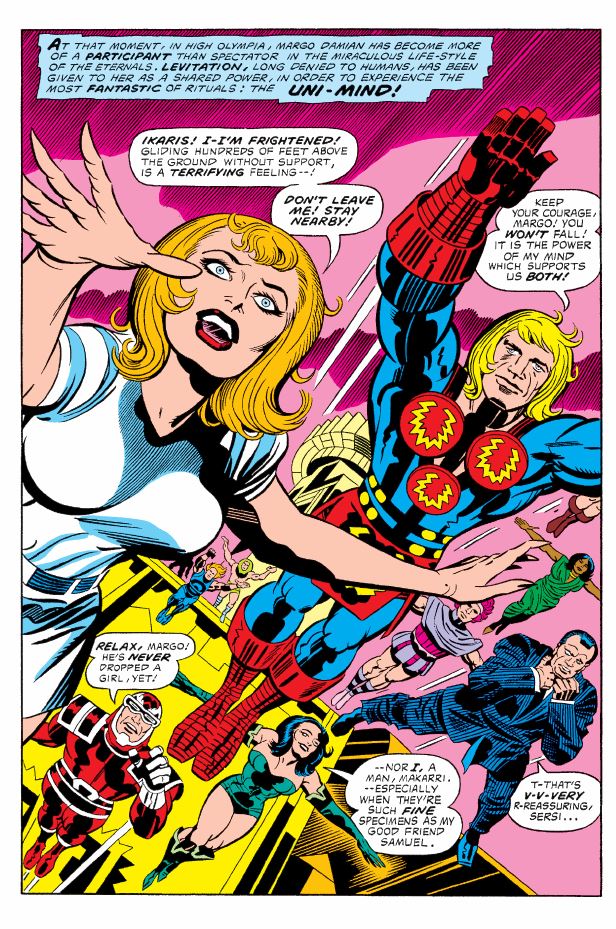
While the Eternal Ikaris is the central protagonist in the early issues, his prominence lessen somewhat as the series progresses and others Eternals entered the scene, notably the sorceress Sersi, the she-warrior Thena, and the All-Father Zuras.
IKARIS: THE WARRIOR. Eternals #1
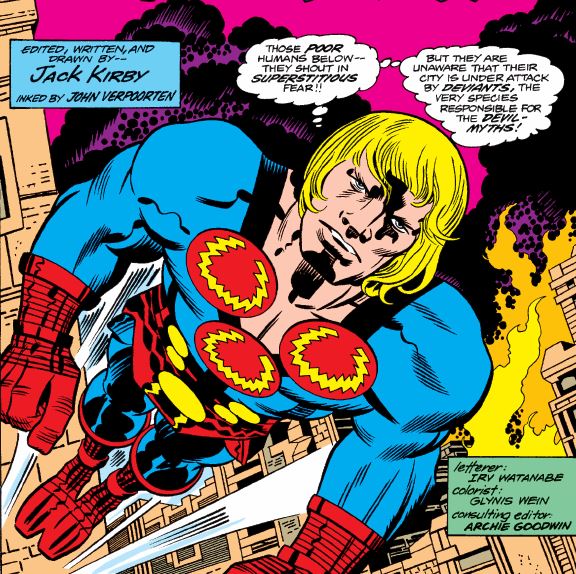
Ikaris is the first Eternal to appear in the series. His name is derived from Icarus, the first human to fly. He is a seasoned warrior, a paladin always ready to fight monsters and protect the innocent. 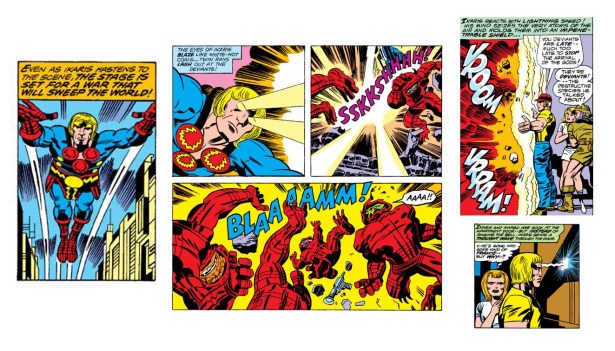
Ikaris’s powers set: flight, eyes-projection, force field (only use once) and telepathy 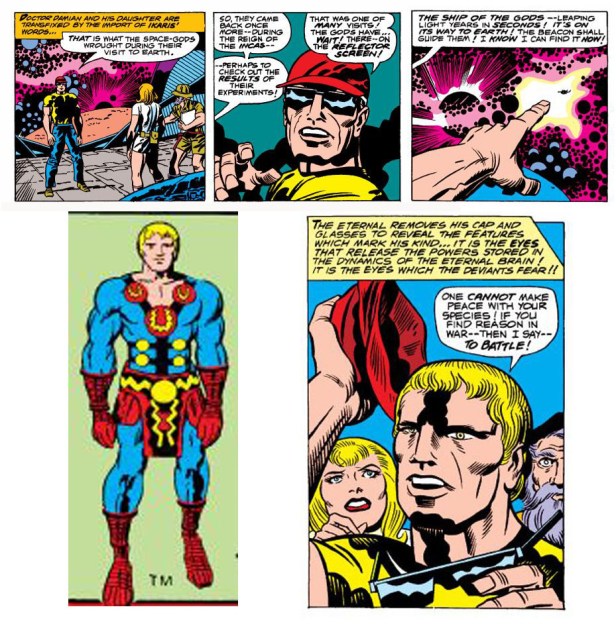
Before using his power and appearing in his costume, Ikaris main use was to explain the series mythology. 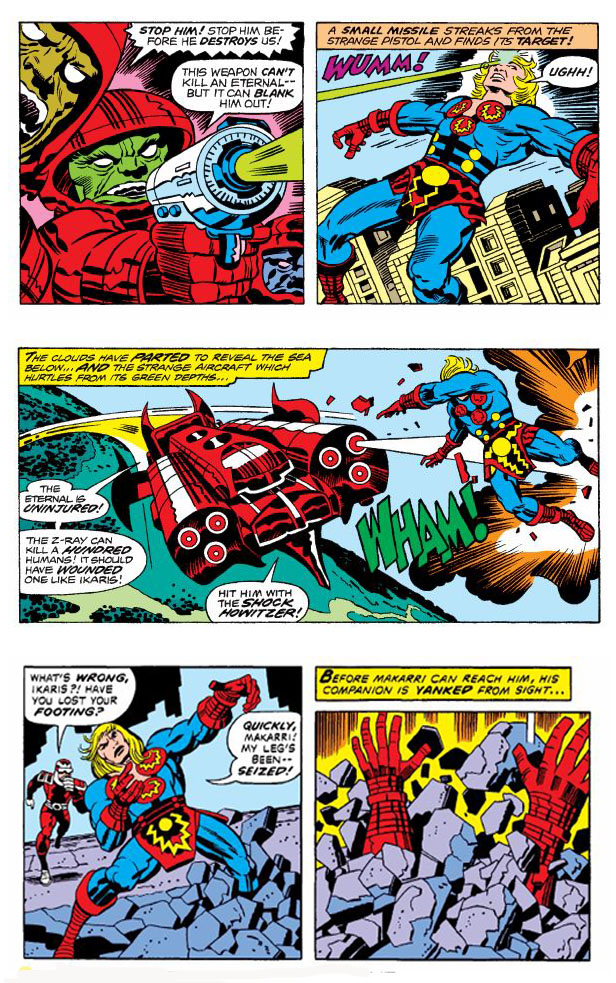
Despite being a valiant warrior and the Eternals poster boy Ikaris clashed and crashed more often than not throughout the series.
SERSI THE SORCERESS: Eternals #3
Sersi is Circe, the sorceress who, in ancient times, transformed Odysseus’s sailors into pigs. She is the Eternal with a vivacious personality and a most impressive power set as she can transform inanimate matter and living beings.
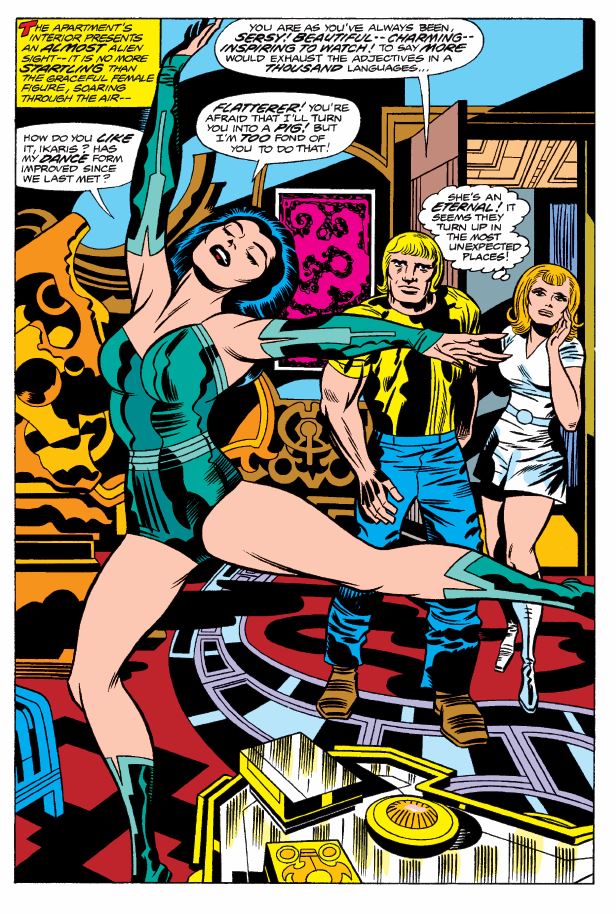
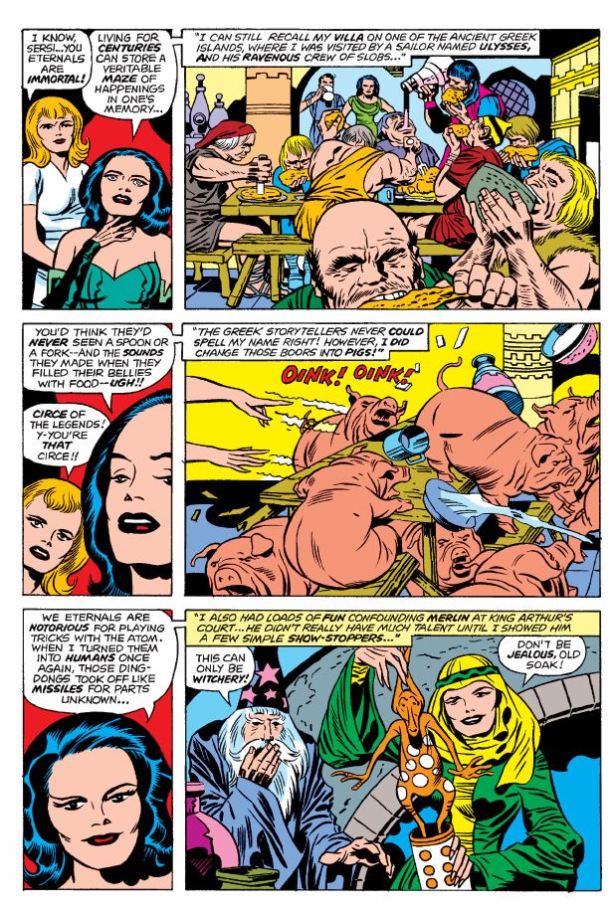
Sersi recalling his encounters with Odysseus and Merlin the Enchanter 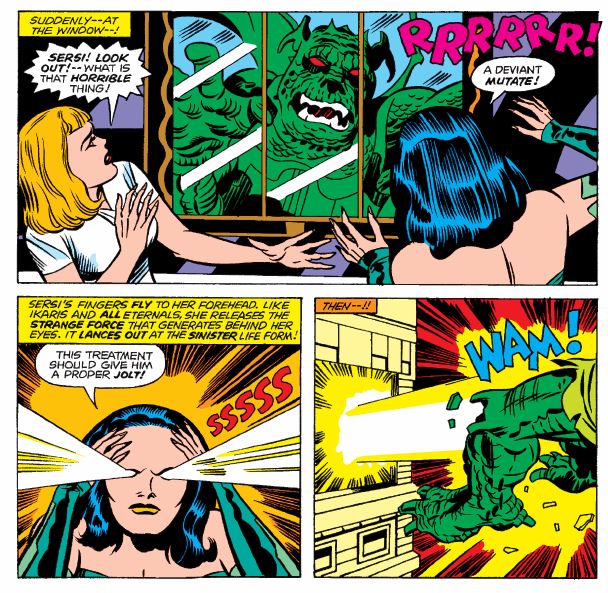
Although not a hardened warrior like Ikaris, Sersi is quite capable of defending herself. 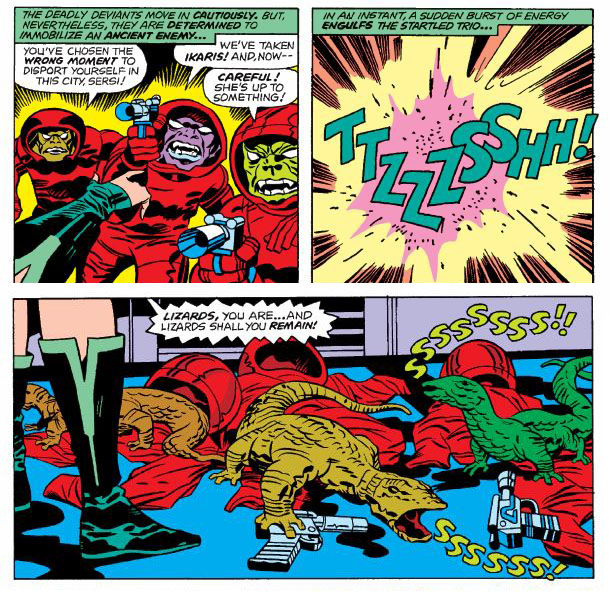
She is particularly effective (even terrifying) when using her transmutation powers on living beings. 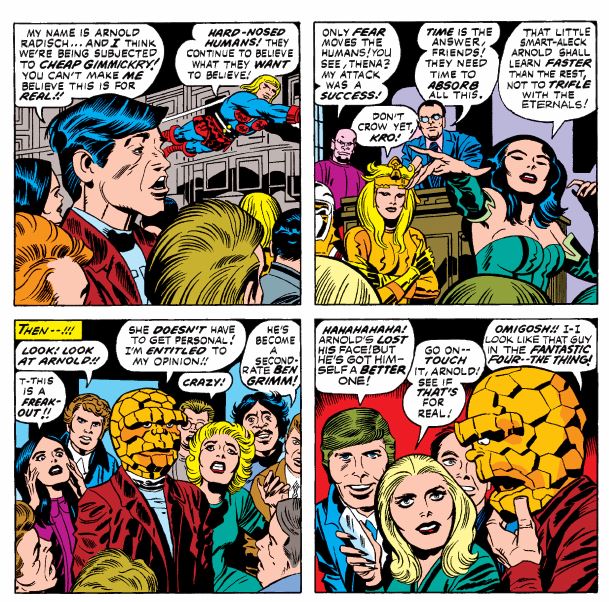
But Sersi also knows how to have fun with this demonstration, which is one of the few nods to the Marvel Universe in The Eternals.
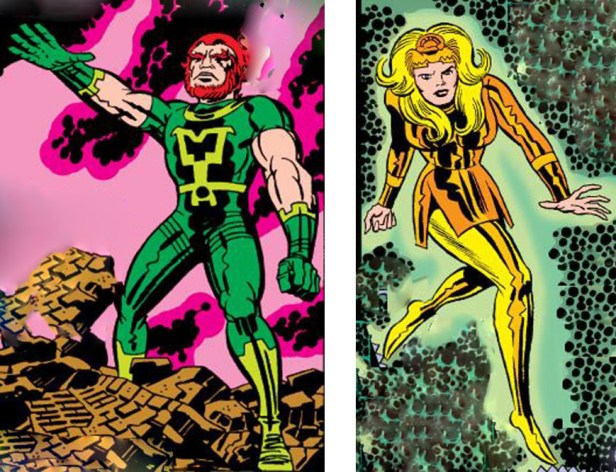
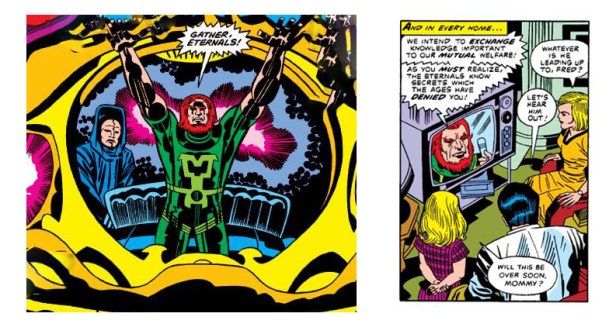
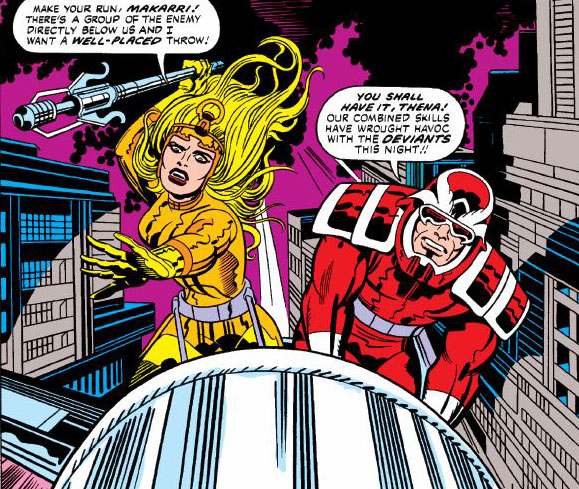
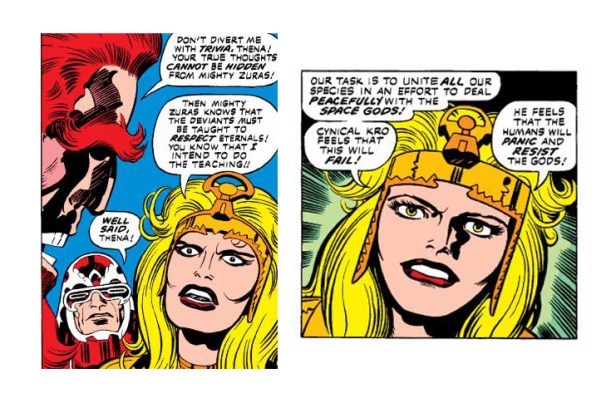
ZURAS THE ALL-FATHER AND THEMA THE AMAZON Eternals #5.
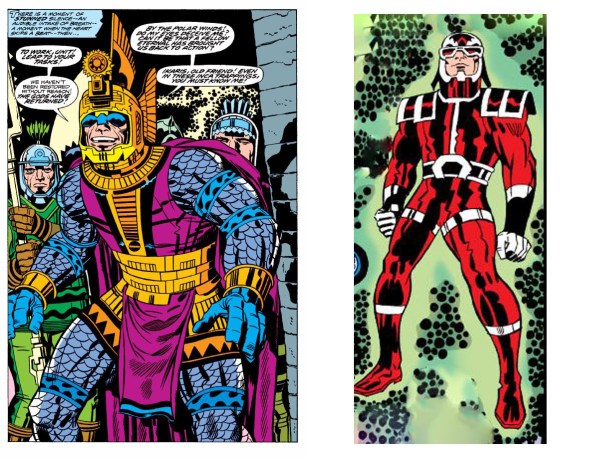
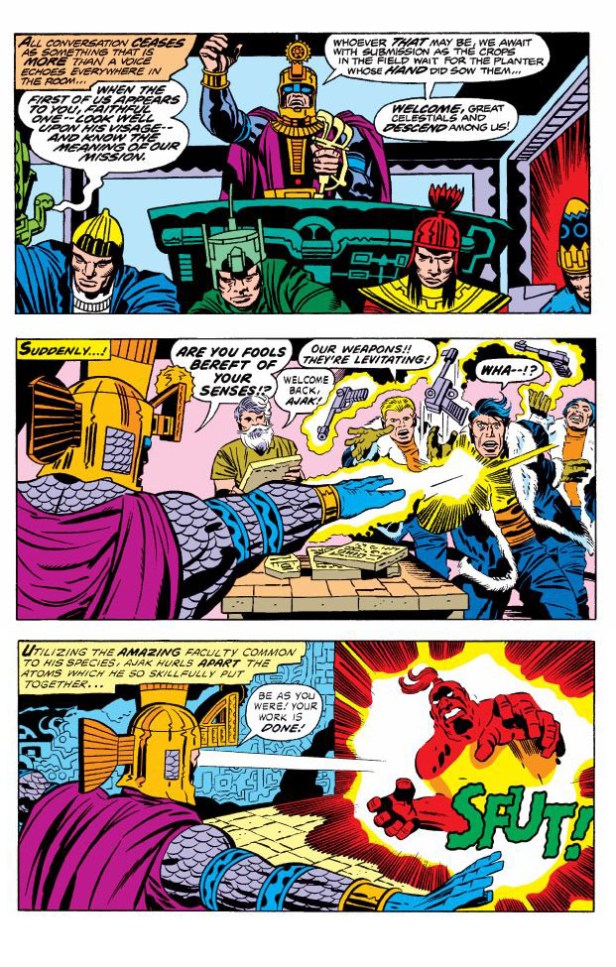
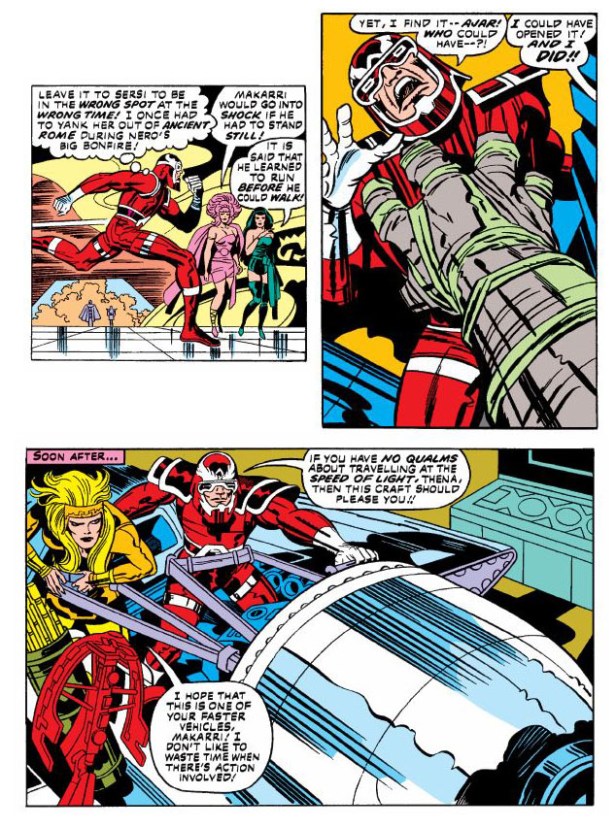
AJAK THE EMISSARY Eternals #2 MAKKARI THE SQUIRE Eternals #5
SPRITE THE PRANKSTER Eternals #8. THE FORGOTTEN ONE Eternals #13. DRUIG Eternals #9
Although centuries old, Spirte is still a kid by Eternal standards and a pretty naughty one at that. He inspired Shakespeare for the character of Puck —for the play: A Midsummer Night’s Dream. He is one of the few Eternal who is not inspired by Greco-Roman mythology.
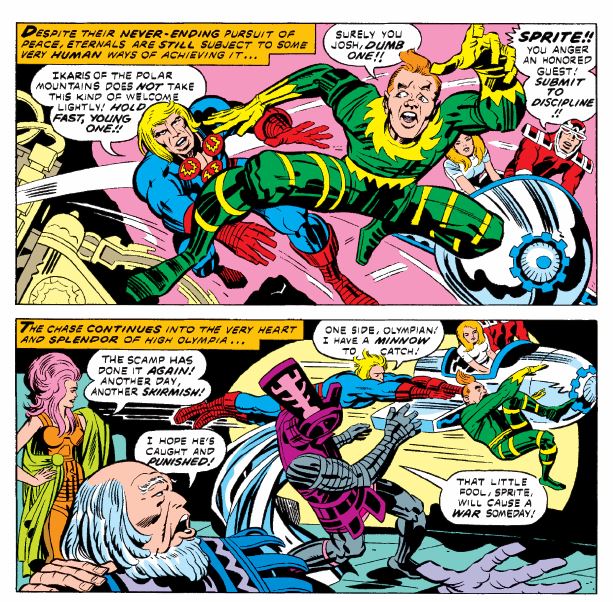
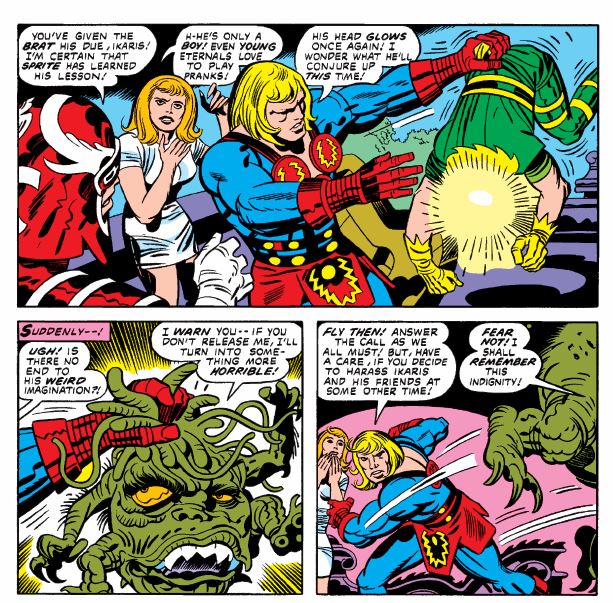
Just like Serci. Sprite can transform matter. However, he uses these powers to commit mischievous pranks. 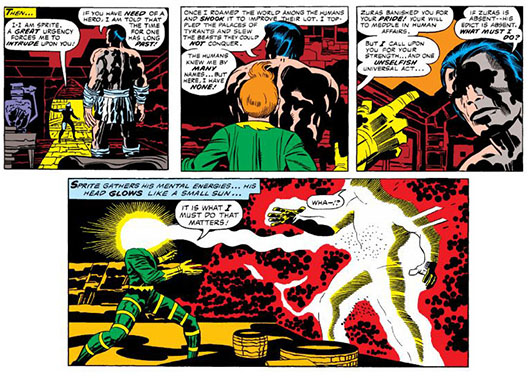
The Forgotten One has embodied brawny heroes of antiquity such as Heracles, Gilgamesh, and Samson. He only appears in a few pages in a single issue but left a very memorable impression. 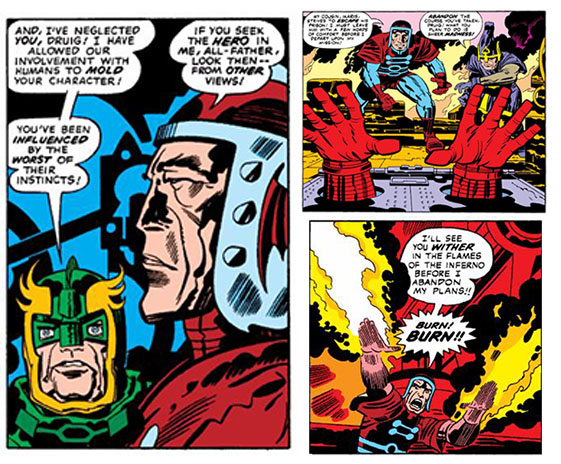
Not all Eternals are good and wise as the ruthless and cruel Druig has shown all too well. He’s the only Eternals to have been depicted as a antagonist.
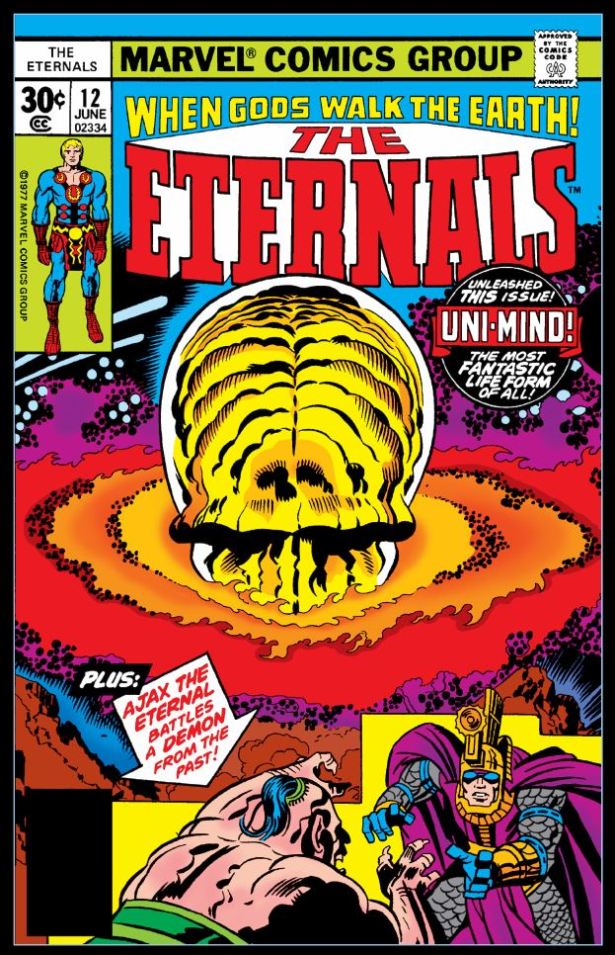
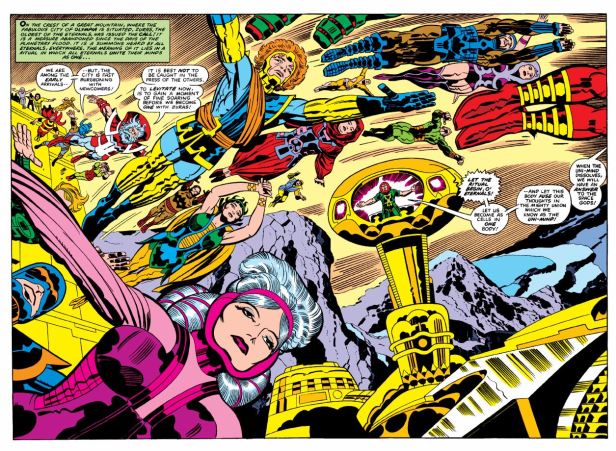
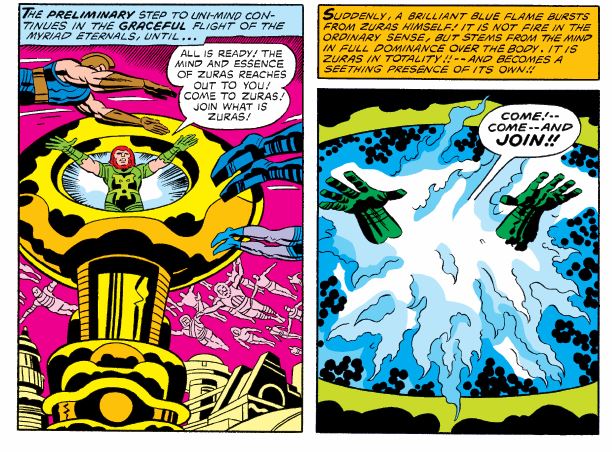
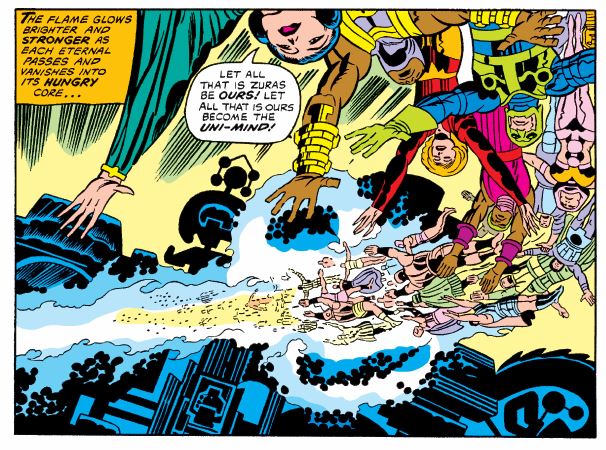
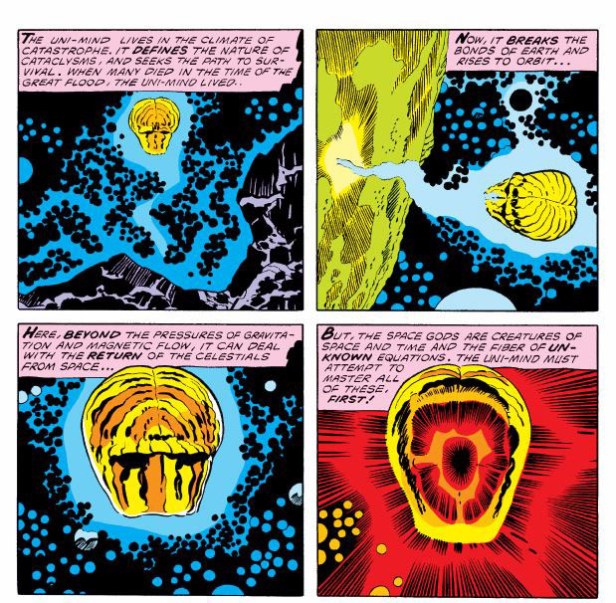
The Unimind is the fusion of the physical and mental essence of the Eternals mingle into a single entity resembling a cerebral cortex. This merging gives a new level of perception and consciousness to those who are part of it. It’s an intriguing concept which has led to some superb artwork by Kirby
KRO, THE DEVIANT WARLORD. Eternals No. 1
Kro is the series central antagonist for it’s first seven issues. He is not the Deviants ruler but leads it’s armed forced.
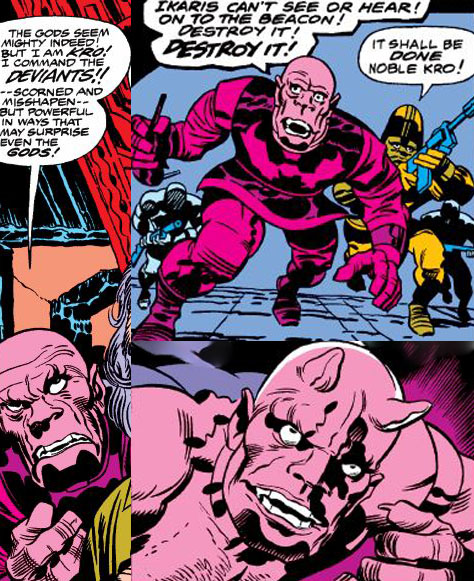
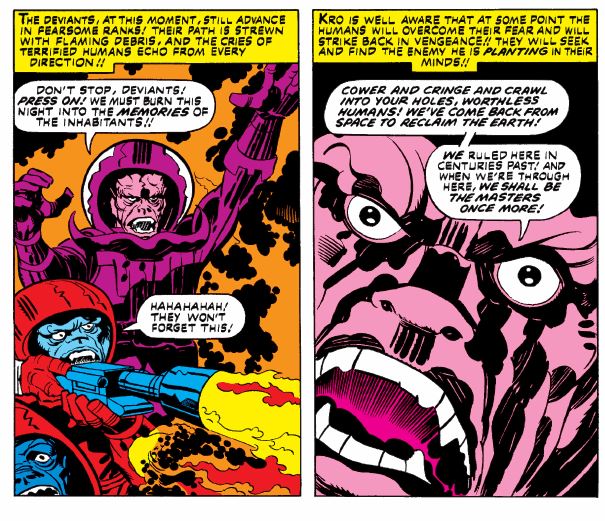
In the early issues, Kro has the look and demeanor of a typical comic book antagonist: brutal and unscrupulous. He even sometimes takes on the appearance of the Devil to frighten humans. 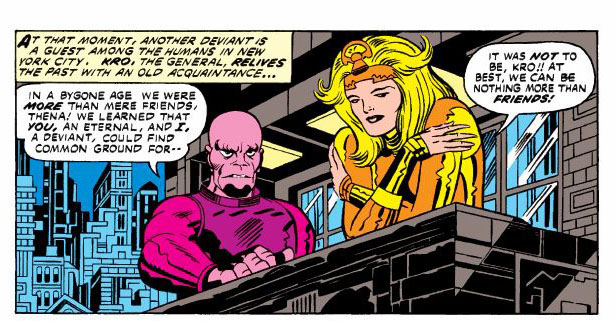
However, when he crossed path with Thena, another facet of his personality is suddenly revealed. They knew each other in ancient times and it quickly becomes clear that he still harbors strong feelings for her. 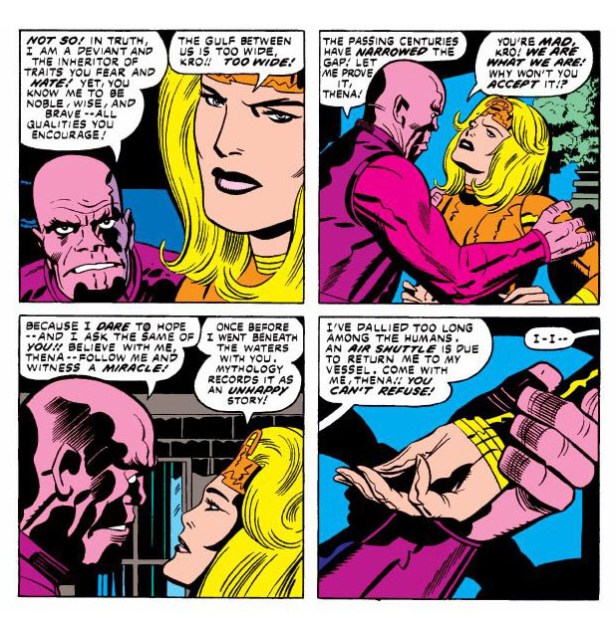
From then on, Kro becomes a different kind of character, more ambivalent.
KARKAS AND THE REJECT: Eternal #8.
Kirby pits the handsome and heroic Eternals against the ugly and cruel Deviants. He thus subscribes to one of the world’s oldest clichés : that physical appearance define moral character. With the next two characters though, he set this convention upside town.
While Karkas and The Reject do belong to the Deviant race, they are both despised by their brethren for their mutant monstrous appearances. Karkas is a giant with red skin, clawed feet, and an oversized head, while Reject is as handsome as a human, or even worse, an Eternal which by Deviants standard is the epitome of ugliness.
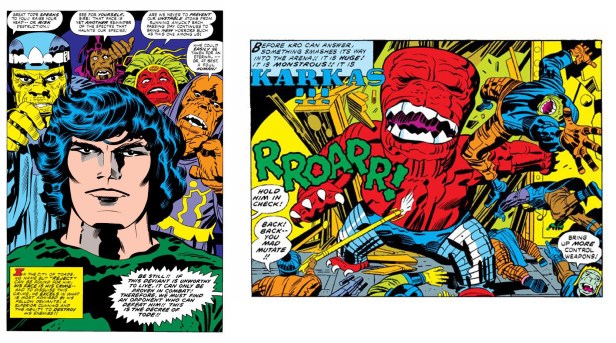
The two characters have personalities that are the complete opposite of their appearances. 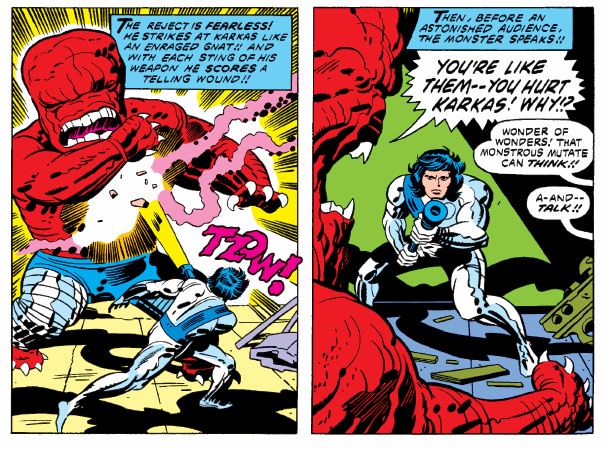
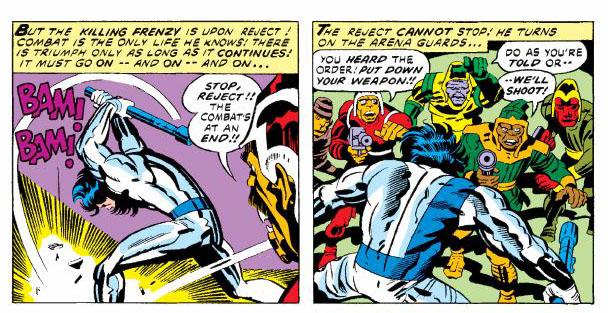
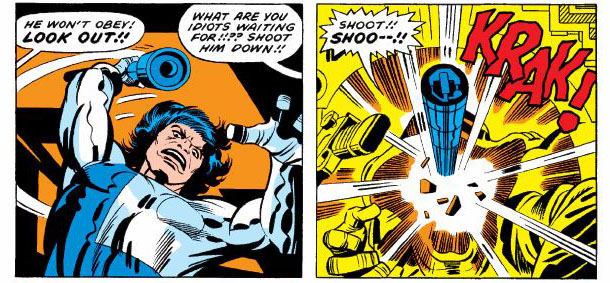
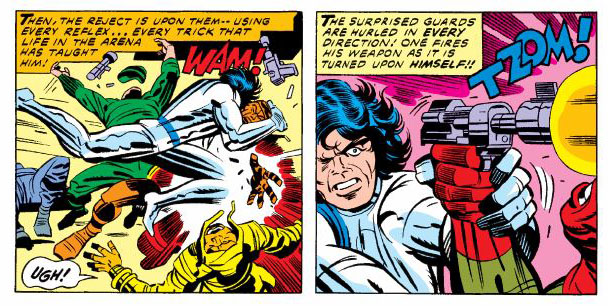
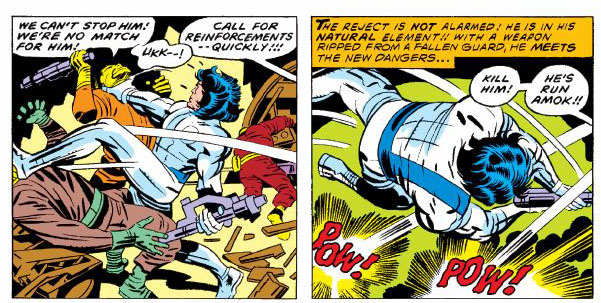
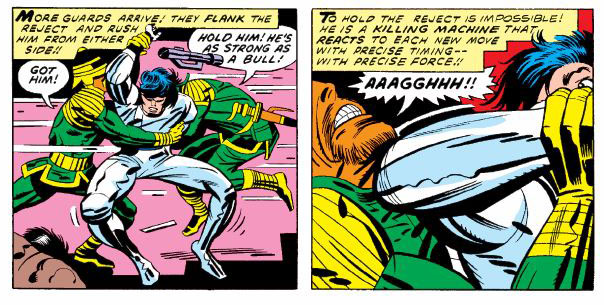
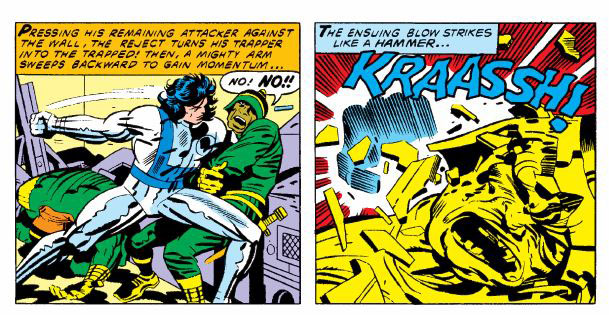
The Reject is a brute trained in gladiatorial combat in an arena. He is a veritable killing machine. 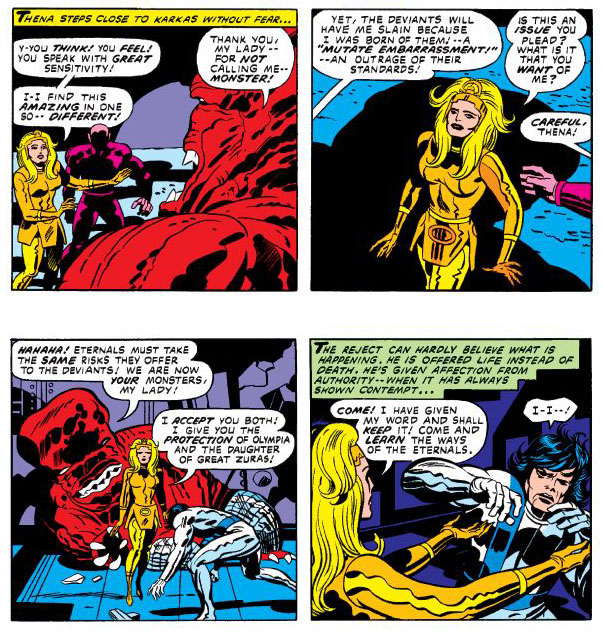
Karkas, on the other hand, has a sensitive nature and is very eloquent. 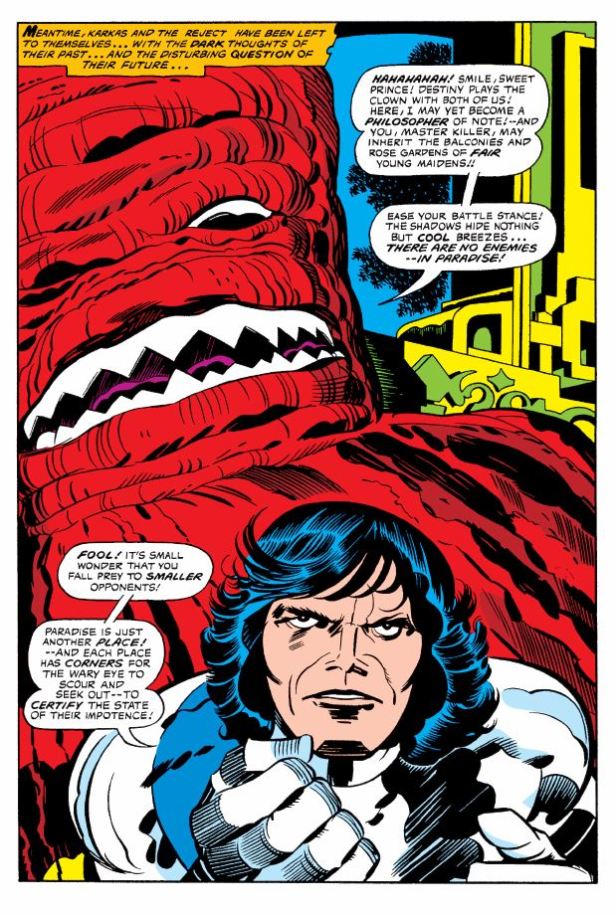
The duo are among the most standout and tragic characters of the series.
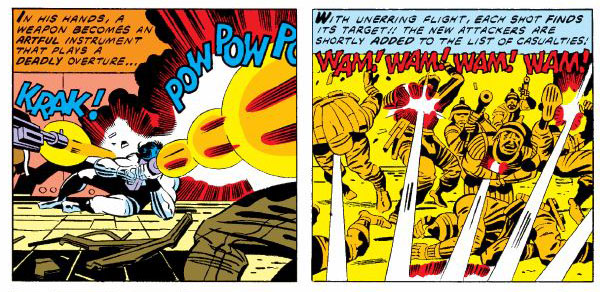
WHAM! ZZAAPP!!, CLANG!!, KRAK!! POW!!: ETERNALS A MAELSTROM OF ACTION
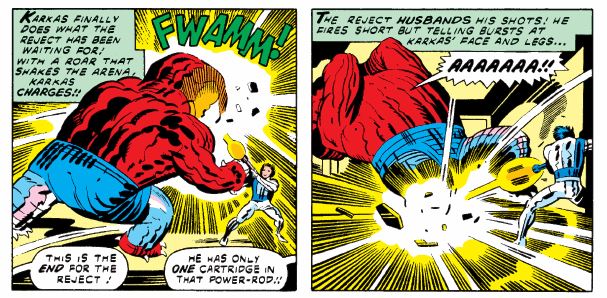
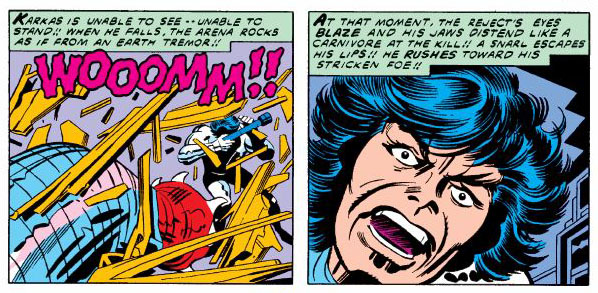
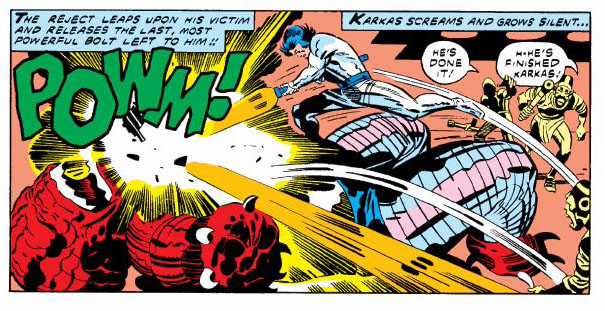
Jack Kirby is rightly celebrated for his high-energy dynamic action scenes. Whether it’s explosions, eyes-beams, or hand-to-hand brawls, The Eternals showcase countless battles sequences that are just as impressive and iconic as the splash pages of titanic giants or grandiose settings.
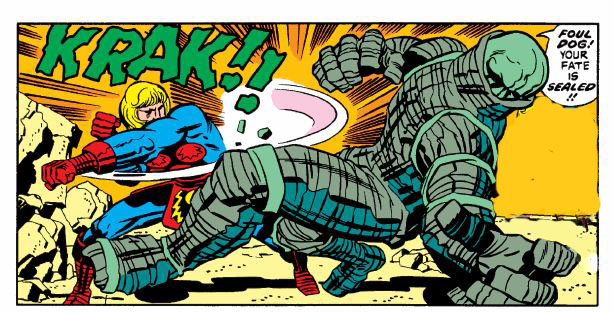
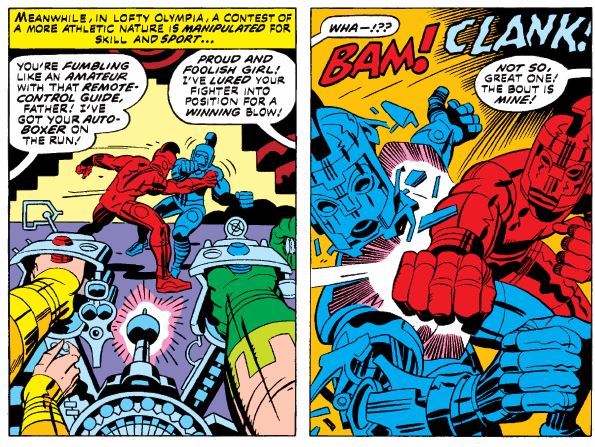
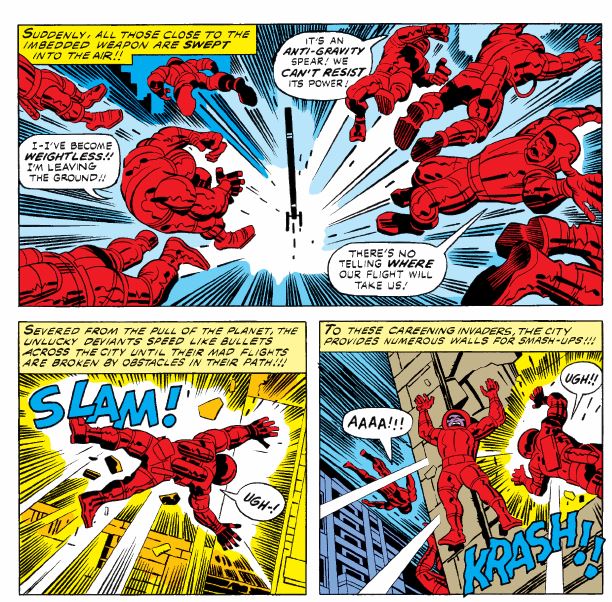
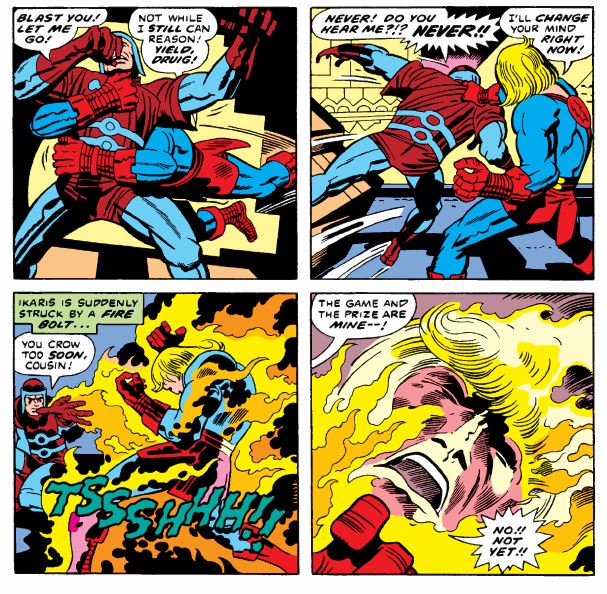
Among all the battles in the series, the one below, taken from issue #9, stand out particularly for it’s violence and intensity. A spectacular piece of pure action that is well worth presenting in its entirety in a slideshow.
The Eternals: An Unfinished Epic
In just over a year and a half, Kirby laid the foundations and established the framework of a new universe. In the series mythology, the Celestials judgement period was supposed to last 50 years. Kirby certainly didn’t envision a story of such lenght but without a doubt, he still had many adventures to recount and numerous revelations to make, including the introduction of new suprising Eternals and Deviants characters.
Unfortunately, the Eternals’ adventures ended with the series abrupt cancellation at issue #19. Despite all the revelations offered up to that point, the series potential still seemed barely scratch. The Eternals as conceived by Kirby thus became an unfinished, interrupted epic like the Fourth World saga a few years earlier. One can measure the loss for fantasy fiction by imagining a what-if scenario where J.R.R. Tolkien could not have wrote beyond Lord of the Ring’s first volume.
In all the Eternals series lasted for twenty issues (19 regular issues plus one-double lenght annuel) totaling over 376 pages, including 20 covers, 24 spreads pages and 10 double-page spreads. Although left unfinished The Eternals has remains one of the most ambitious and grandiose sagas ever created by a single artist in the seventies.
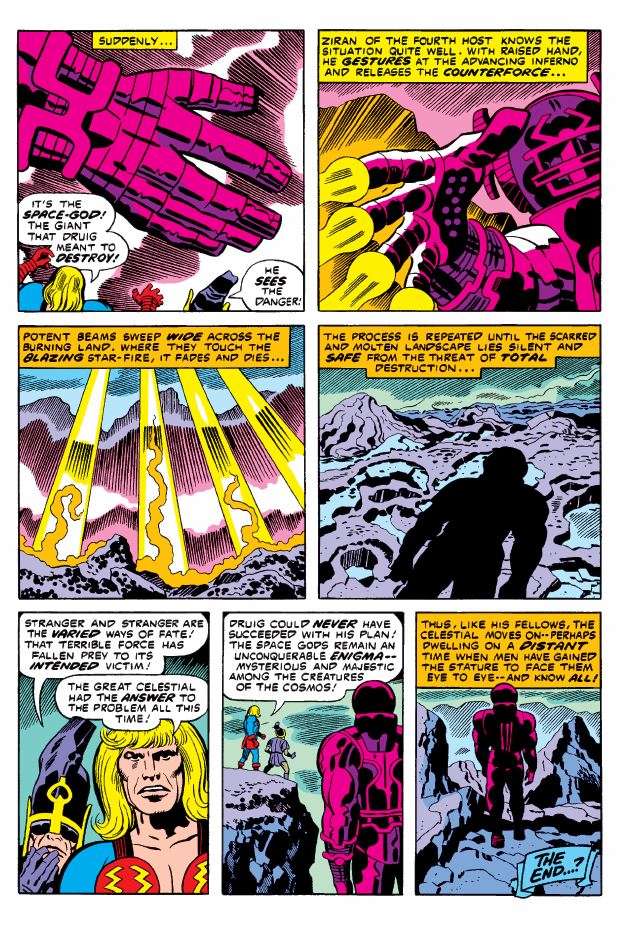
Jack Kirby’s very last page for The Eternals.
With the cancellation of The Eternals, Kirby moved on to other things. Although his creative life was far from over, he never again found the drive or desire to return to a saga as ambitious and complex as The Eternals, which is now considered his last major work.
That said, Marvel Comics’s editors, writers and artists quickly grasped the potential of Kirby’s new cosmic mythology and promptly incorporated it into the Marvel Universe. How they did it, and how The Eternals were transformed from Kirby’s original vision, is however a tale for another time.
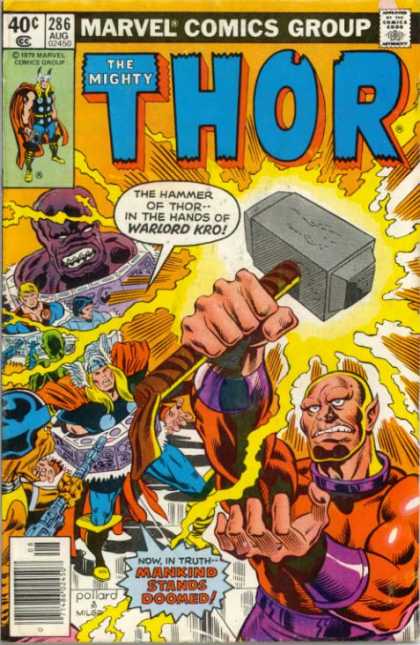
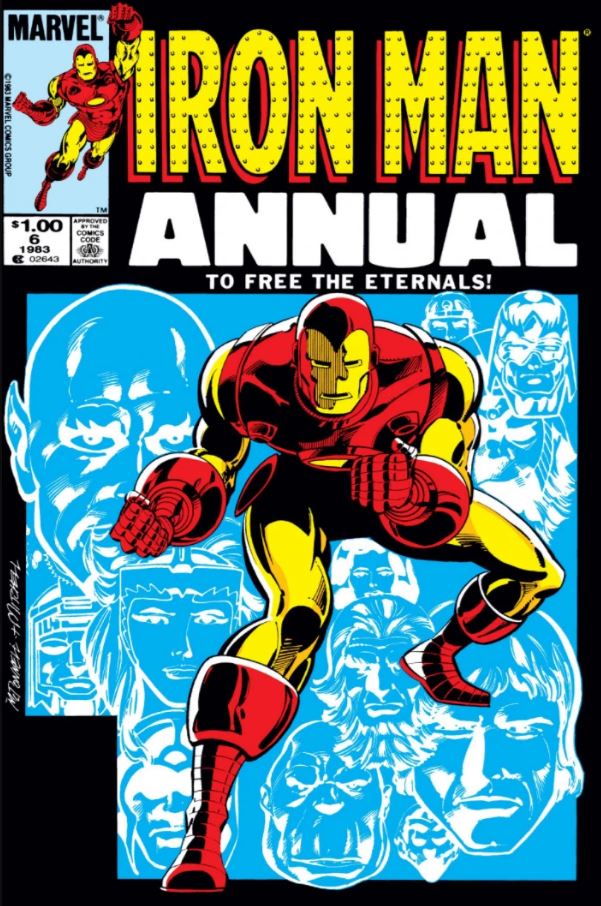
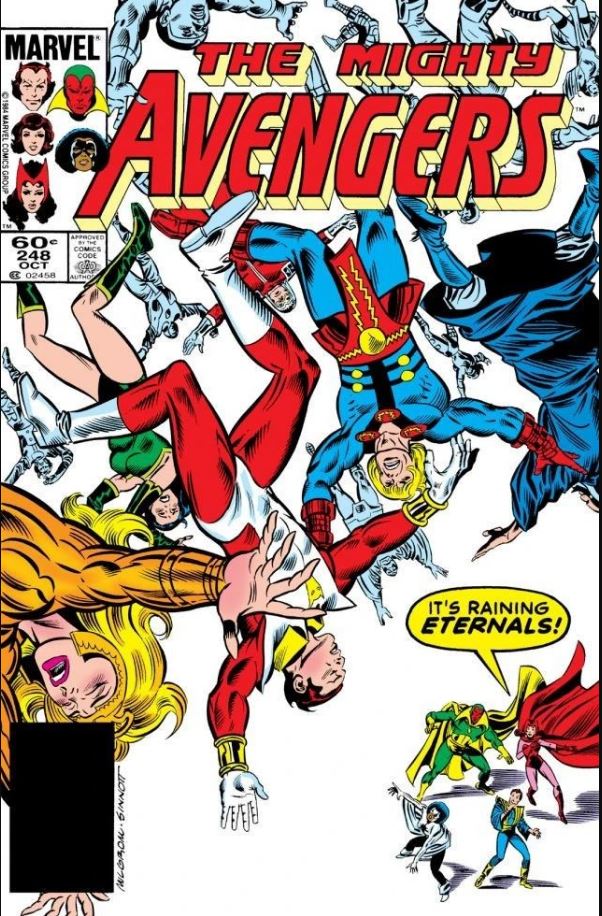
Marvel’s Eternal’s series and miniseries from the Eighties to 2021.
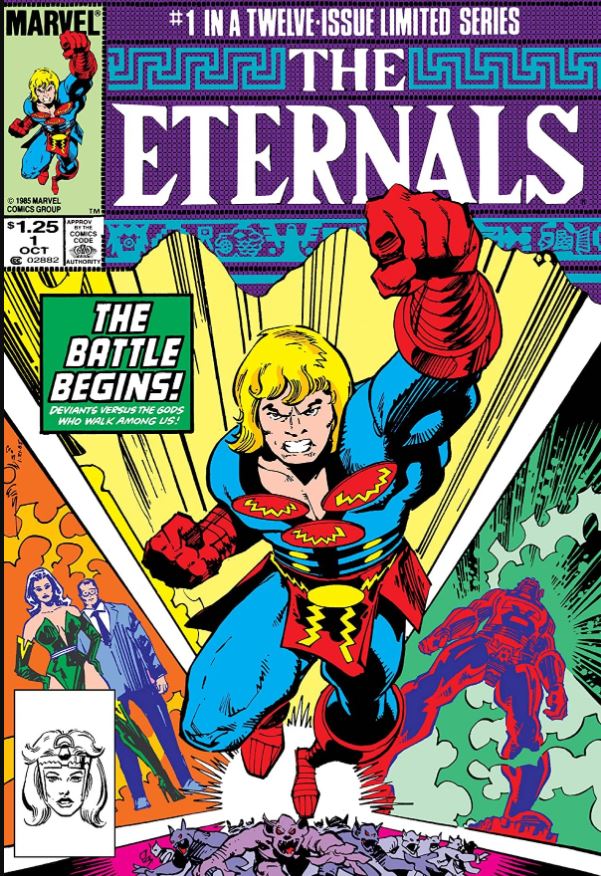
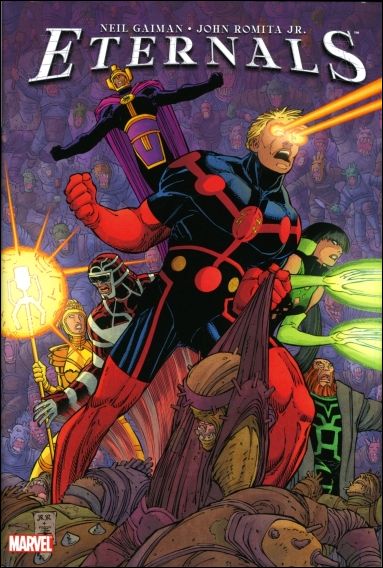
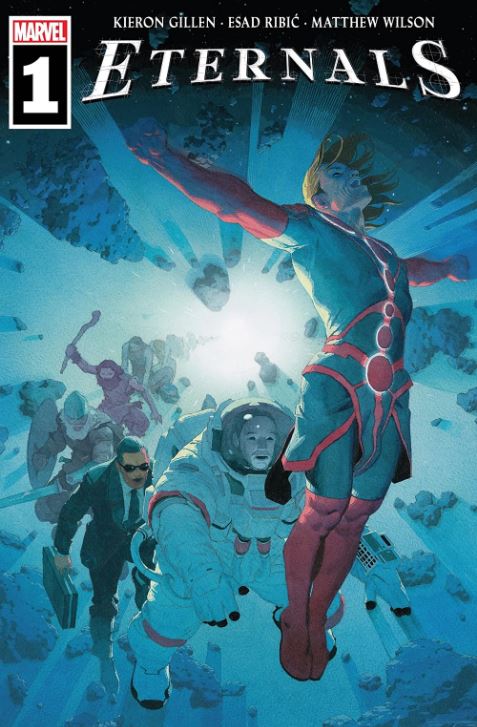
The Eternals series was published in the United States as a 350+ page omnibus in 2006 and then in two volumes in 2007.
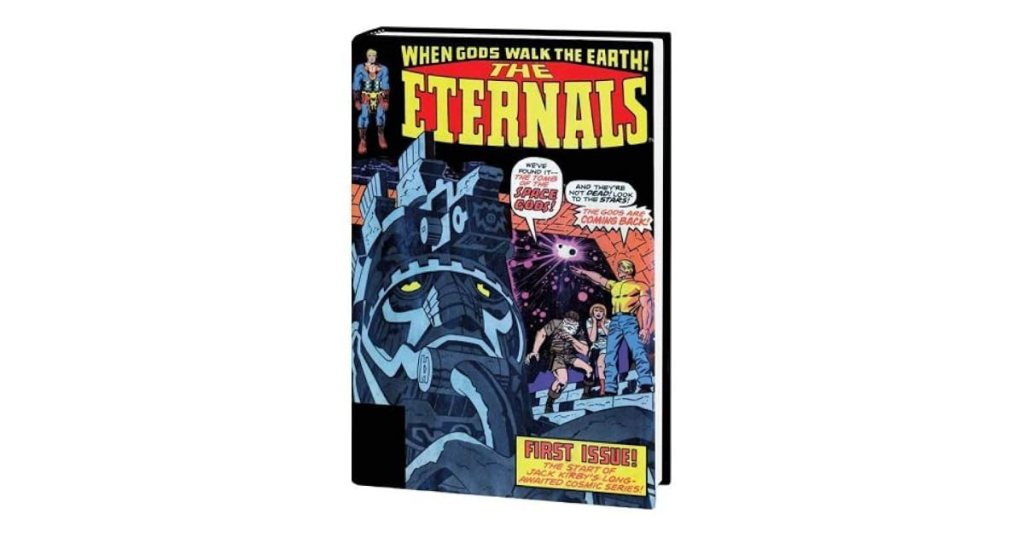
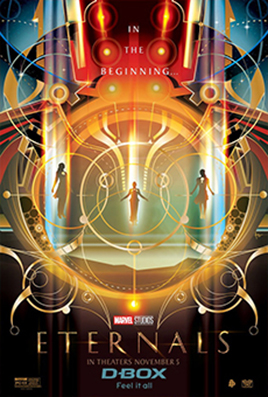
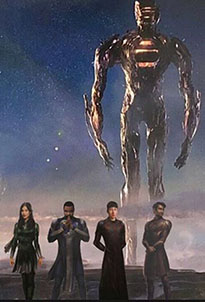
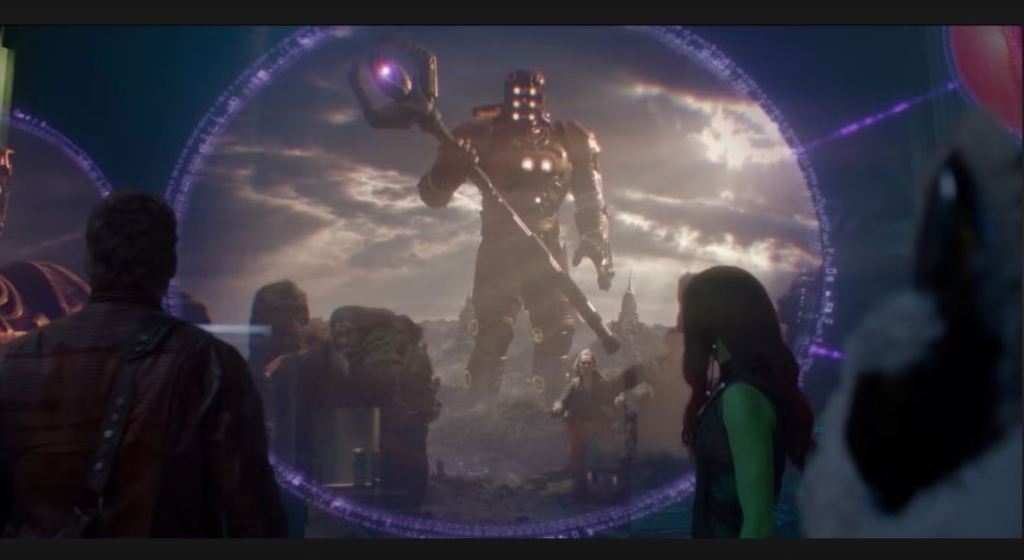
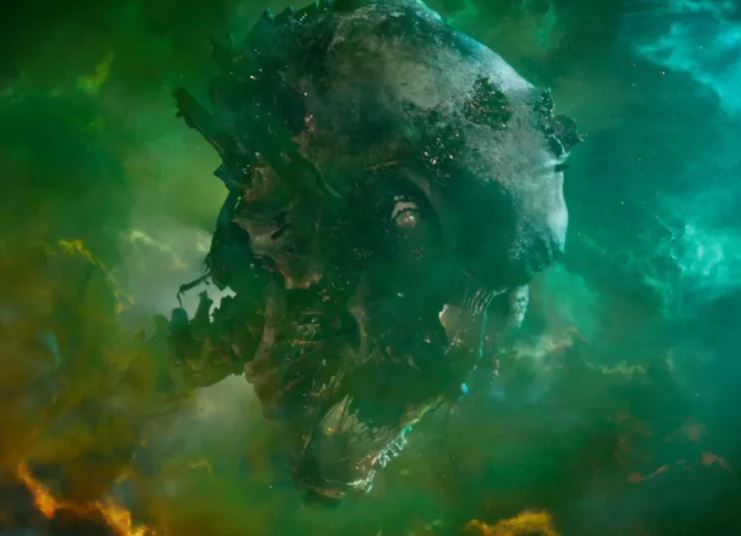
In 2021, The Eternals concept was adapted into a film, although Jack Kirby’s original ideas were only very partially used. However the Celestials themselves made couple of striking anonymous cameos years before in Guardiens of the Galaxy (2014). Two of them can also be glimpse in Thor Love and Thunder.